Sunday, November 3, 2013

Quebec municipal elections today

Municipal elections are being held across the province of Quebec's 1,111 municipalities today. Voters will elect mayors, and municipal councillors and in some municipalities, borough mayors and borough councillors as well. In many of Quebec's municipalities- including its 11 largest cities, local political parties will be contesting for seats their respective councils. Elections in those cities are all about the parties trying get a majority of seats on their councils. Most councils are elected using the first past the post electoral system.

Individual parties in Quebec municipalities are usually short lived operations, and often groups pledging support behind one particular mayoral candidate. This can easily be seen in their names, such as “Equipe Denis Coderre pour Montreal” (Team Denis Coderre for Montreal). If parties are unsuccessful they will often disband as soon as the election is over, and new ones will be created for the next. Municipal parties can sometimes be ideological, but are often just supporters of a particular mayoral candidate. None have official ties to federal or provincial parties, but many often draw their support from the same voters.

It has not been a good four years for municipal politicians in Quebec. Corruption scandals have plagued the mayorships in both Montreal and Laval. In Montreal, Mayor Gerald Tremblay resigned in November of 2012 following corruption allegations, and was replaced by Michael Appelbaum, who became the city's first Jewish mayor. However, Appelbaum was no saint either, and was arrested in June after charges of fraud, conspiracy, breach of trust and corruption. Applebaum would then be replaced by Laurent Blanchard, who has survived until now as mayor. In Laval, Mayor Gilles Vaillancourt who had been mayor for 24 years, and whose party held every seat on council also resigned in the Fall of 2012 following allegations of corruption. In May, Vaillancourt was arrested and charged with gangsterism. Vaillancourt's successor Alexandre Duplessis also left office, in May, also following corruption allegations, when he asked for the city to be placed under trusteeship. Nearly the entire council was implicated in the Charbonneau Commission in May for corruption. Since May, the mayor of Laval has been Martine Beaugrand. She was one of only two councillors to have not been implicated in the Charbonneau Commission.


Montreal

Montreal's municipal districts


The 2013 election marks the beginning of a new era in Montreal civic politics. Gerald Tremblay had been mayor of the city for 10 years before his resignation in 2012. Also gone with him was his political party, the centrist Union Montreal which formally dissolved in May. The party had won a majority of seats on Montreal City Council in the last election- 38 of 65. When the party dissolved, most of the members became independents before reorganizing into the new political parties.

Current incumbent city councillors


At present there are eight political parties represented on Montreal City Council, five of which are single-borough parties (they only run candidates in one specific borough of the city) and three hold seats in multiple boroughs. Those three parties are Equipe Denis Coderre pour Montreal (Team Denis Coderre for Montreal), Coalition Montreal, and Projet Montreal (Project Montreal). Each of those three parties are led by a leader who is also each party's mayoral candidate. Each mayoral candidate runs in a typical city-wide mayoral race, but also has a home district that they run in. Should a mayoral candidate lose the mayoral race, they can still sit in council if they are elected in their district. If a candidate is elected mayor, then their “running mate” (also known as “co-candidate” or “fellow candidate”) becomes councillor of their district, if the mayoral candidate also wins their district.

Montreal City Council is made up of 65 members, which includes a mayor, elected city wide, 18 borough mayors elected from 18 of the 19 boroughs (Ville-Marie has no borough mayor) and 46 councillors elected from 46 districts across the city. In addition, Montreal voters will be electing 38 separate borough councillor positions. These separate borough councillors are not members of city council, but often represent the same parties. Some boroughs have their city councillors as also borough councillors, and therefore do no have separate borough councillors.

Equipe Denis Coderre is the party of former federal Liberal MP Denis Coderre who resigned his seat in the House of Commons in June to concentrate on his bid for mayor. His party is mostly made up of former Union Montreal members, as both parties are generally aligned with the Liberals. Equipe Coderre's incumbent councillors are mostly from areas that are strong Liberal areas (such as the north end), with high percentages of Anglophones and Allophones. His party currently holds 17 of the 65 seats on council. Coderre is running in Ovide-Clermont District which is in Montreal-Nord borough, the same area he represented as an MP. Currently, his party is the largest on council, and Coderre is leading the polls in the race for mayor. A CROP poll from October 15 showed him at 41%.

Coalition Montreal is a new party which formed in July to support the mayoral bid of Marcel Cote, an economist and founding partner of SECOR. The 71 year old Cote ran for the Union Nationale in 1973, but has since worked for former Quebec Premier Robert Bourassa and Prime Minister Brian Mulroney. His past affiliations indicate that Cote is a centre-right candidate, but his party comes from a merger of independents and Vision Montreal, which was a centre-left party that formed the official opposition on Montreal City Council in 2009. Vision Montreal had attracted mostly sovereigntist voters, who backed the mayoral candidacy of Vision's leader, Louise Harel- a hardcore separatist (and former PQ MNA) whose English skills were poor. Not surprisingly, most of Coalition Montreal's incumbent candidates are from the east end of the city, which is where sovereignty has the most support. But it should be noted that it is not a separatist party, and Cote has few connections to the movement. Cote is running in the district of Cote-des-Neiges, which is currently held by Equipe Coderre councillor Helen Fotopulos. The October CROP poll pegged Cote in 4th place at 11%.

Projet Montreal is the left wing party on Montreal City Council, and has been active since 2004. The party won just one seat in the 2005 municipal election, but increased to 10 seats in 2009. For the third election in a row, their mayoral candidate in Richard Bergeron, the city councillor from Jeanne-Mance in Le Plateau-Mont-Royal Borough, and represented De Lorimier District from 2005 to 2009. Bergeron has come under fire in the past for being associated with the 9/11 truther movement, but despite this is still relatively popular with his urban progressive base. His party currently holds 10 seats, 8 of which are located in the central part of the city. Bergeron will be running in a new district this time, in Saint-Jacques District in Ville-Marie borough, a seat currently held by Coalition Montreal's Francois Robillard. Interestingly, Beregeron's co-candidate is Stephane Dion's wife, Janine Krieber. The CROP poll has Bergeron in 3rd place with 21%.

There is a fourth party that has no seats on Montreal City Council, but whose mayoral candidate may very well finish second. This party is known as “Vrai changement port Montreal” (Real Change for Montreal). The party is generally centre-left, and is led by lawyer Melanie Joly. Joly has most recently served as chief organizer of Justin Trudeau's Liberal leadership campaign last Spring. While she was excluded from the debates, her candidacy has picked up steam, with the CROP poll giving her 24%, which would put her in second place. Joly is running in Notre-Dame-de-Grace, which is currently held by Projet Montreal councillor Peter McQueen. Unlike the other three parties, Vraie changement is not running a near-complete slate, as they are only running in 35 seats.

Outside of the “big four”, there is one other municipal party, Integrite Montreal (Integrity Montreal), led by Michel Brule. They are running in 23 seats. There are also seven independents running for mayor, Claude Blais, Louai Hamida, Paunel Paterne Matondot, Clement Sauriol, Kofi Sonokpon, Patricia Tulasne and Joseph Young. Outside of this, there are 8 parties that are running candidates in lone wards, five of which have sitting councillors. They are Equipe Andree Champoux pour Verdun (in Verdun), Equipe Anjou (in Anjou), Pro action LaSalle (in LaSalle), Equipe conservons Outremont (in Outremont), Equipe Dauphin Lachine (in Lachine), Equipe Richard Belanger (in L'Ile-Bizard-Sainte-Genevieve), Option Verdun (also in Verdun), and the LaSalle Alternative Party (also in LaSalle). Currently, Equipe Anjou, Equipe Belanger, Equipe Dauphin, Pro action LaSalle and Equipe conservons Outremont all hold at least one seat on Montreal City Council. It is indeed possible that there may be at least nine different parties elected tonight.


Results of the 2009 council election


Quebec City

Quebec's provincial capital has been led by mayor Regis Labeaume since a mayoral by-election was held in 2007 following the death of the previous mayor, Andree Boucher. Labeaume is extremely popular, and is widely expected to win once again. His party, the conservative Equipe Labeaume (Team Labeaume) won all but two seats in the 2009 municipal election. Labeaume himself won 80% of the vote. 

Quebec City's 21 Districts


The 2009 election saw the Quebec City electoral map with 27 districts, but the map has been reduced to 21 districts. The city also has six boroughs, but there are no separately elected borough positions. Voters will have one vote for mayor, and one vote for their city councillor.

In 2009, Labeaume and his party faced little opposition. His main mayoral rivals were libertarian radio host Jeff Fillion who won just 8.5%, and Yonnel Bonaventure, leader of Defi Vert de Quebec, the municipal green party- who won 8.1%. On Council, Labeaume's only opposition came from two independent candidates who were elected from the city's central borough, La City-Limoilou. Opposition parties won no seats.

Results of the 2009 council election


Since the 2009 election, Labeaume has campaigned against city unions, and changes in labour laws. His conservative policies have proven quite popular in the centre-right leaning capital. However, his policies have also alienated the left, which is rallying behind the candidacy of David Lemelin, the leader of Democratie Quebec (Democracy Quebec City). His party includes the two independents who won seats in 2009, as well as two defectors from Equipe Labeaume. Polls suggest Labeaume will win in a landslide; Leger released a poll on October 24 that showed Labeaume ahead of Lemelin 67-18 in the mayoral race and Equipe Labeaume ahead of Democratie Quebec 58-21 in the council race.

There are three other candidates running for mayor of Quebec City; Claude Gagnon, Denis Hache and Armand Pare. There is a third party in the city, “Alliance de Quebec” that is only running candidates in Beauport borough. One councillor has already been elected- by acclamation, Steeve Verret of Equiple Labeaume in Lac-Saint-Charles-Saint-Emile District.


Laval

Laval's 21 Districts


Laval is the third largest city in Quebec, and Montreal's large northern suburb. Like Montreal, Laval's election this year will mark a new beginning for the city which has been ruled by Gilles Vaillancourt for over two decades. With only two members of the 22 member city council not being named in the Charbonneau commission, the city will be electing a nearly-brand new council. Perhaps a well needed fresh start for the city.

In 2009, every single district of Laval voted for the party of Gilles Vaillancourt, Parti PRO des Lavallois. Only one district, Saint-Bruno in the central part of the city was close. Vaillancourt himself won 61% of the vote. Two parties ran against him, Mouvement lavallois, led by Lydia Aboulian and Parti au service du citoyen, led by Robert Bordeleau. In the mayoral election, Aboulian won 23% of the vote, and Bordeleau won 15%. 

Results of the 2009 council election


There will be five parties contesting the mayorship of Laval. The race will be open, as current mayor Martine Beaugrand has opted to not run for re-election. One councillor will be running for mayor, Claire Le Bel- who leads the Option Laval party. Her political career has been vindicated had recorded one of her meetings with Vaillancourt which was used in the Charbonneau commission, although she is not without baggage, as her former campaign manager has been charged with making a false accusation. Laval's #2 party in 2009, Mouvement lavallois (Laval Movement) will be running again, with police officer Marc Demers as their mayoral candidate. He has previously run for the PQ and there is also some controversy over whether or not he is eligible to be mayor, as he had lived outside of Laval for six months in 2012. The third major party running is Action Laval, led by Jean-Paul Gobe. Gobe is a former Liberal MNA who has since distanced himself with the party.


Laval's #3 party in 2009, Parti au service du citoyen (Party serving the citizen) is also running again. Its mayoral candidate is once again Robert Bordeleau, who has come under scrutiny for owing taxes to Revenu Quebec. The fifth party running is Nouveau Parti des lavallois (New Laval Party), led by Guy Landry. Landry has also come under scrutiny for being asked to repay $40,000 in social assistance money and having half of his candidates leave. Also running for mayor are four independents, Jacques Foucher, Helene Goupil Nantel, Regent Millette and Marc-Aurele Racicot. For city council, there are only three incumbent councillors running, all as independents.

For what it's worth, Leger published a poll October 22 showing Demers in the lead with 21%, Le Bel in second with 14% and Gobe in third with 10%.


Gatineau

Gatineau's 18 Districts


Across the river from Ottawa is Gatineau, Quebec's fourth largest city. And for the first time that I know of, Gatineau will have a municipal political party running a slate in an election. Gatineau's current mayor is Marc Bureau, who has served as mayor since defeating the previous mayor, Yves Ducharme in 2005. Marc Bureau, and the majority of the Gatineau City Council are independents. Bureau has led the city with a pragmatic approach, and is vaguely centre-left.

Bureau is being opposed by a new left wing party known as “Action Gatineau”. Action Gatineau is led by Buckingham city councillor Maxime Pedneaud-Jobin. The party will be running a full slate of candidates, including three incumbents, Stefan Psenak in Aylmer, Andre Laframboise in Lucerne, and Mireille Apollon in Oree-du-Parc. It will be interesting to see how citizens of Gatineau react to having a political party on the ballot for the first time.

After Bureau and Pedneaud-Jobin, the third main candidate for mayor in Gatineau is Jacques Lemay, a former fire chief for the city. Also running for mayor is Francois P. D'Aoust. Segma Research released a poll of the race on October 23 that showed Bureau well out in front with 51%, Peneaud-Jobin at 34%, Lemay at 13% and D'Aoust at 2%. For council, Action Gatineau is polling at 30%, compared to 33% for independents. That is not a bad poll number for the new party.


Longueuil

Longueuil's 15 Districts


Quebec's fifth largest city is Longueuil, a South Shore suburb of Montreal. Since 2009, its mayor has been former Bloc Quebecois MP Caroline St-Hiliare. St-Hilaire won the 2009 election, defeating Jacques Goyette of the Parti municipal de Longueuil after he suffered from allegations of improriety. Parti municipal had previously governed the city for 27 years. St-Hilaire's victory was in the form of a minority, as her party, Action Longueuil won just 12 of 27 seats and prevented her from passing her first proposed budget.

During the last 4 years, St-Hilaire's opposition has faded away, and now Parti municipal de Longueuil no longer exists. The only opposition party running candidates in this election is Option Greenfield Park, which is only running in Greenfield Park Borough. They have just one incumbent running. St-Hilaire's only opposition for the mayoralty is from Pardo Chiocchio, a businessman and former president of the South Shore Italians Association.

The size of the Longueuil City Council is being reduced. The 2009 election was fought over 26 Districts, while this election will be fought over just 15. Despite this, there were three districts where the candidates were elected unopposed. Sylvie Parent was elected in Fatima-du Parcours-du-Cerf District, France Dube was elected in Parc-Michel-Chartrand District and Stephane Richer was elected in Des Explorateurs District.


Sherbrooke

Map of Sherbrooke's electoral districts


Now to Sherbrooke, the capital of the Eastern Townships. The Mayor of Sherbrooke is Bernard Sevigny. He has been mayor since 2009, when he defeated Helene Gravel by just 122 votes. His prospects for this election look a lot brighter, however as he has weak opposition.

Sevigny leads the Renouveau sherbrookois (Renewal Sherbrooke) party. His party's only opposition comes from “Comme une eau Terre” (Earth as Water; play on words, as it sounds like the French word for “Community), a local green party. There are two independents running for mayor, Roy Patterson and Denis Pellerin.

Council is Sevigny's biggest problem. Last election, he only won a minority of seats, but has since picked up some independents. In total, 10 independent councillors are running for re-election, compared to seven for Renouveau sherbrookois. In total there are 20 council seats. In addition, two boroughs (Brompton and Lennoxville) elect separate borough councils.


Saguenay

Map of Saguenay's 19 Districts


In Saguenay, the city which includes the former cities of Chicoutimi, Jonquiere and La Baie, there is a race between independent mayor Jean Tremblay and the opposition party, Equipe du renouveau democratique (Team Democratic Renewal) led by retired accountant Paul Grimard. Tremblay has been mayor of Saguenay since amalgamation in 2002, and before that he was mayor of Chicoutimi since 1997.

Grimard's opposition party is running in 18 of Chicoutimi's 19 districts. However, no incumbent councillor represents the party.


Levis

Map of Levis' 15 Districts

Across the St. Lawrence from Quebec City is the suburban city of Levis. The incumbent mayor, Danielle Roy Marinelli will not be running for re-election. Running to replace her are six candidates, three independents and three candidates representing political parties.

The governing party in Levis is Levis Force 10. They are running Gilles Lehouillier as their mayoral candidate. The only other party running a full slate of candidates is Renouveau Levis (Renewal Levis) who are running Antoine Dube as their mayoral candidate. There is also Action Levis, who is running Andre Jean as their mayoral candidate. Only Levis Force 10 is running any incumbent councillors.


Trois-Rivieres

Map of Trois-Rivieres' 16 Districts


Trois-Rivieres, in central Quebec is led by independent mayor Yves Levesque. The centre-right mayor has led the city since 2002. He is facing opposition from one opposition party and two city councillors who were in an unofficial group of councillors who would often oppose the mayor.

The only party running candidates in Trois-Rivieres is Force 3R, a fringe centre-right party. They will be running candidates in 10 of the 16 districts in the city, as well as a mayoral candidate, Richard St-Germain. The two city councillors running are Sylvie Tardif (Marie-de-l'Incarnation District) and Catherine Dufresne (Sainte-Margeurite District). Both candidates are on the left, and are accusing each other of splitting the vote. Two other candidates are running for mayor, Pierre Benoit Fortin and Marcelle Girard.


Terrebonne

Map of Terrebonne's 16 Districts


This Montreal North Shore suburb is led by mayor Jean-Marc Robitaille. The former Tory MP has been mayor of the city since 1997. His party, Equipe Robitaille (Team Robitaille) forms the government on city council. Robitaille is being opposed by Antoine Hanachian and Renouveau Terrebonne (Renewal Terrebonne) which has no incumbent councillors running. Two districts (4 & 15) have been acclaimed, with the Equipe Robitaille candidates running unopposed there.


Saint-Jean-sur-Richelieu
Map of Saint-Jean-sur-Richelieu's 12 Districts


This city southeast of Montreal is seeing eight strong mayoral candidates and six political parties that all have a chance of winning seats. The huge amount of candidates is caused by the incumbent mayor Gilles Dolbec leaving municipal politics, and a free-for-all to take his place.

Perhaps the most notable candidate for mayor of Saint-Jean is Claude Bachand, a former BQ MP. He leads the Avec Bachand (With Bachand) party. Three city councillors are also running for mayor, Alain Laplante (Equipe Alain Laplante [Team Alain Laplante]), Stephane Legrand (Vision Legrand) and Alain Paradis (Equipe Paradis [Team Paradis]). There are two other parties, Parti Fecteau (Fecteau Party, mayoral candidate: Michel Fecteau) and Action civique (Civic Action, mayoral candidate: Jean Lamoureux). Independents running for mayor include Michel Gauthier, Khaled Kalille and Paul Turcotte. Five of the six parties are also running full slates on city council, meaning each district has at least 5 candidates. Only Action civique is not running a full slate, but they are running in 10 of the 12 districts.


Repentigny

Repentigny's 12 Districts


North of Montreal is the suburb of Repentigny. The mayor of Repentigny is Chantal Deschamps, who has been in power since 1997. Her party is Equipe Deschamps (Team Deschamps) which holds a majority on council. She is being opposed by Jean Langlois, the mayoral candidate for Parti democratique de Repentigny-Le Gardeur (Repentigny-Le Gardeur Democratic Party). Parti democratique is running one incumbent councillor, in District 9, Serge Gauthier. The rest of the incumbents running are in Equipe Deschamps, except for an independent running for re-election in District 12, Sylvie Langlois Brouillette.


Brossard
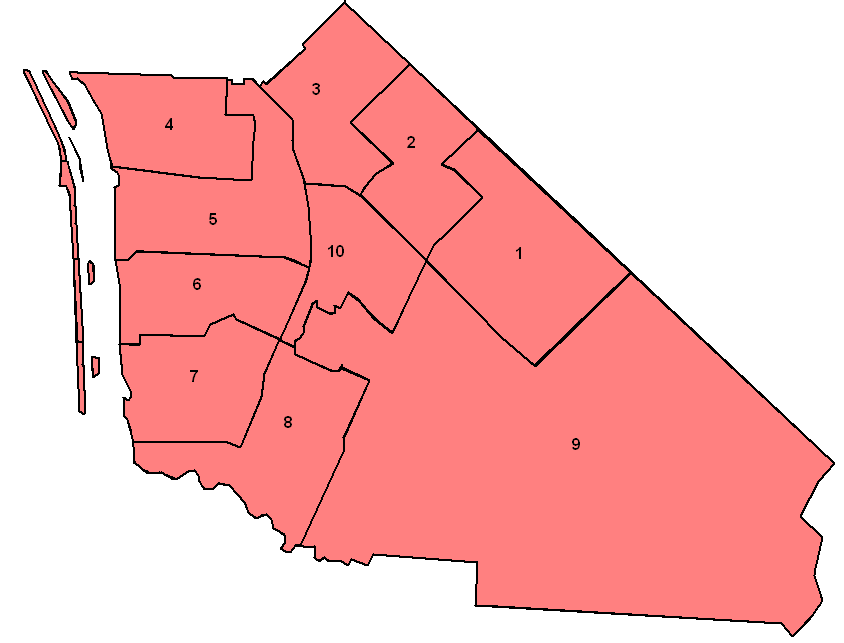
Brossard's 10 Districts


On the South Shore of Montreal, next to Longueuil is Brossard. Brossard's mayor is Paul Leduc. Leduc has been mayor of Brossard since 2009 and was also mayor from 1990 until 2001, when the city was briefly amalgamated into Longueuil. Leduc's party is Priority Brossard, which is also the governing party on city council. Leduc is opposed by Brossard Revival, whose mayoral candidate is Louis Lemoine, the executive vice president of a sustainable energy company. Brossard Revival has no incumbent councillors in the election.


Other major cities:

  • Drummondville: Alexandre Cusson is running against Camille Desmarais for mayor. Neither sit on council. There are no parties in Drummondville.
  • Saint-Jerome: Two councillors are running for mayor, Alain Langlois (Independent) and Martin Pigeon (Ensemble Saint-Jerome). Also running are Yves Charette (Union des citoyens) and Stephane Maher (Vision Saint-Jerome). There is only one incumbent councillor running for re-election, who is running for Vision.
  • Granby: Granby mayor Richard Goulet is running for re-election. Two councillors are running against him, Pascal Bonin and Etienne Jenneau. Also running are Carl Bouvier, Louise Bruneau and Denny O'Breham. There are no parties in Granby.
  • Blainville: Councillor Richard Perreault is running for mayor, representing the governing party of the city, Vrai Blainville. Running against him is the leader of Mouvement Blainville, Florent Gravel.
  • Saint-Hyacinthe: Three candidates are running for mayor, Claude Corbeil, Pierre Rheaume and Gaston Vachon. None are sitting councillors. There are no parties in Saint-Hyacinthe.
  • Shawinigan: Mayor Michel Angers is being challenged by Yves Gelinas and Ronald St-Onge Lynch for the mayorship. There are no parties in Shawinigan.
  • Dollard-Des Ormeaux: Incumbent mayor Edward Janiszewski has been acclaimed back into office. There are no parties in DDO.
  • Rimouski: Incumbent mayor Eric Forest has also been acclaimed back into office. There are no parties in Rimouski either.
  • Chateauguay: Mayor Nathalie Simon is running for re-election, representing the Citizens' Action party which is the governing party in Chateauguay. She is being opposed by Independent candidate Steve Brisebois.
  • Saint-Eustache: Mayor Pierre Charron is running for re-election representing Option Saint-Eustache, the governing party of the city. His opponent in the mayoral election is Independent city councillor Denis Pare.
  • Victoriaville: Mayor Alain Rayes has been acclaimed into office with no opposition. There are no parties in Victoriaville.
  • Mascouche: Running for mayor in Mascouche is Luc Theriault of Equipe Luc Theriault, Guillaume Tremblay of Vision democratique de Mascouche and Independent Pierre Nevraumont. None of the parties have any incumbent councillors running. Only two incumbent councillors are running, and they are both independents.
  • Mirabel: Two city councillors are running for mayor in Mirabel, Jean Bouchard of Action Mirabel and Independent Luc St-Jean. Also running are Independents Felix Daoust and Rene Plouffe. Action Mirabel is the governing party in the city.
  • Rouyn-Noranda: Running for re-election in Rouyn-Noranda is mayor Mario Provencher whose party in Equipe Mario Provencher. However, his “party” has no candidates, and there are no other parties. Running against him is Vuyani Gxoyiya and Richard St-Michel.
  • Boucherville: Mayor Jean Martel is running for re-election against city councillor Francine Crevier Belair. Martel's party, Option citoyen(nes) is the governing party on council. Crevier Belair is an independent.
  • Salaberry-de-Valleyfield: Mayor Denis Lapointe is running for re-election against councillor Robert Savard. There are no parties in Salaberry-de-Valleyfield.
  • Sorel-Tracy: Incumbent Mayor Rejean Dauplaise is facing competition from three city councillors trying to replace him, Corina Bastiani, Michele Lacombe Gauthier and Gilles Lemieux. Three other candidates are running in the crowded field, Andre Mandeville, Serge Peloquin and Jean Tremblay. The only party running candidates is Parti d'aujourd'hui, whose mayoral candidate is Corina Bastiani. No incumbent councillors are running for that party however.


That's all the time I have for now. Polls close tonight at 8pm Eastern.

Thursday, October 31, 2013

Calgary, Edmonton and Strathcona County municipal election vote summaries

Results of the Alberta municipal elections were released on Friday. The following are the results of the three largest municipalities in the province, Calgary, Edmonton and Strathcona County:

2013 Calgary mayoral election

Mayoral candidate Popular Vote % Wards carried
Naheed K. Nenshi 193,393 73.65 14
Jon Lord 56,226 21.41 0
Sandra Hunter 4,181 1.59 0
Carter Thompson 3,157 1.20 0
Larry R. Heather 1,857 0.71 0
Bruce Jackman 1,397 0.53 0
Norm Perrault 1,117 0.43 0
Jonathan Joseph Sunstrum 775 0.30 0
Milan Papez 474 0.18 0
Popular vote %
Turnout: 39%
Main candidates

 Key
Wards won by candidate


Mayor Nenshi won easily, capturing all 14 of Calgary's wards. His top ward was Ward 8 (83%) in the central part of the city and his worst ward was Ward 10 (61%) in the east part of the city.


2013 Edmonton mayoral election

Mayoral candidate Popular Vote % Wards carried
Don Iveson 132,162 62.22 12
Karen Leibovici 41,182 19.39 0
Kerry Diotte 32,917 15.50 0
Joshua Semotiuk 2,596 1.22 0
Gordon Ward 2,248 1.06 0
Kristine Acielo 1,292 0.61 0
Popular vote %
Turnout: 33%
Main candidates
 Key
Wards won by candidate


In what was supposed to be a 3-way race, councillor Don Iveson won a decisive victory in Edmonton, capturing all 12 municipal wards. His top ward was Ward 8 (Strathcona area, in central Edmonton) where he won 70%. His worst ward was Ward 1 in West Edmonton where he won 55%.


2013 Strathcona County mayoral election

Mayoral candidate Popular Vote % Wards carried
Roxanne Carr 12,583 50.90 5
Linda Osinchuk 12,137 49.10 3
Popular vote %
Turnout: 37%
Main candidates
 Key
Wards won by candidate


The race in Strathcona County was razor thin, with councillor Roxanne Carr defeating mayor Osinchuk by just 446 votes. Carr won 5 wards, all in the north half of the county, while Osinchuk won the remaining 8 wards in the south. Carr's top ward was Ward 2 (59%) in central Sherwood Park where he was the councillor. Osinchuk's best ward was Ward 6 (54%) in the rural southwest.

Wednesday, October 30, 2013

Nunavut election summary


Nunavummiut (residents of Nunavut) went to the polls Monday to elect their legislative assembly. Unlike Canada’s 10 provinces or the Yukon, Nunavut has a consensus government, meaning there are no parties. The territory’s 22 lawmakers are elected the same way as politicians are in the south, except they are all independents. Now that the election is over, the newly elected legislative assembly will convene beginning on November 15 to elect a Premier from within its ranks.  This form of government is known as “consensus government”.

Nunavut’s current Premier is Eva Aariak, who represents the Iqaluit East constituency, in Nunavut’s capital. She has been Premier since the last election in 2008, when she replaced Nunavut’s first Premier (Nunavut became a territory in 1999), Paul Okalik.  Aariak however announced she would not be seeking the Premiership for the next term, but she did run in the new riding of Iqaluit-Tasiluk in the city’s north end.

Nunavut's 22 new ridings


Redistribution

Nunavut is Canada’s smallest territory with only 32,000 people. However, it is Canada’s third fastest growing jurisdiction, with a population growth rate of 8.3% between 2006 and 2011. This trails only Alberta and the Yukon. This population growth spurred the territory to increase the size of the legislature from 19 districts to 22, changing the electoral map of the territory. Iqaluit, the territory’s largest city- gained one seat, from three to four. Arviat, Nunavut’s second largest community located in the far south of the mainland has been split in two, with its new riding also taking in the neighbouring community of Whale Cove. In addition- despite being Nunavut’s 7th largest community- Igloolik was also split in half, with its northern half becoming the new riding of Aggu and the southern half remaining in the former riding of Amittuq with the nearby community of Hall Beach. This division is perplexing, considering the larger communities of Baker Lake, Cambridge Bay and Pond Inlet are not split between more than one riding. Also, Igloolik registered a decrease in population between 2006 and 2011, while Baker Lake, Cambridge Bay and Pond Inlet did not. This strange pecularity showed up on election day, as only 226 people voted (out of 457 registered voters), with the winner receiving 96 votes. This is the lowest raw turnout out of all Nunavut ridings that held elections.

Other major riding boundary changes include the former riding of Nattilik losing the community of Talyoak to become Gjoa Haven, with Talyoak joining Kugaaruk (Pelly Bay) in the new riding of Netsilik. Kugaaruk was removed from the riding of Aivilik which gains Coal Harbour from Nanulik becoming Aivilik. The other community in Naulik, Chesterfield Inlet joins the riding of Rankin Inlet North to become the new riding of Rankin Inlet-Chesterfield North. Rankin Inlet South-Whale Cove loses Whale Cove to the aforementioned new riding of Arviat North-Whale Cove.


Results


Two ridings saw no election whatsoever, as both their incumbent MLAs were elected with no opposition. This occurred in Kugluktuk in the far west where MLA Peter Taptuna was re-elected, and in the new riding of Netsilik where MLA Jeannie Ugyuk was acclaimed. She had represented the riding of Nattilik which had been dissolved. Instead of running in the new riding of Gjoa Haven, where most of her constituency was located, she ran in Nattilik which added her home community of Talyoak with Kugaaruk.

Nine of Nunavut’s ridings were open seats- that is no incumbents were running. One of those seats, Uqqummiut- on the north shore of Baffin Island resulted in a 187 vote tie. One other riding, Rankin Inlet South also resulted in a tie. MLA Lorne Kusugak found himself tied with newcomer Alexander Sammurtok with 172 votes. In both cases, a recount will occur within the next ten days or so. If they are still tied, then a by-election will occur. In the final 9 constituencies, just four incumbents were re-elected and five were defeated. The most notable candidate to go down to defeat was Premier Aariak who lost in her new riding of Iqaluit-Tasiluk (random fact: she is the fourth Premier in a row to lose their riding in Canadian elections!)

Overall, the legislative assembly will see 13 (or 14) new faces. Among them will be 30 year old David Joanasie (South Baffin riding), the youngest person to ever be elected in Nunavut’s short history and Isaac Shooyook, a unilingual Inuktitut speaker (Quttiktuk riding). The legislature will also include just three women, three Whites (non Inuit), and two past MLAs, including former Premier Paul Okalik who has been elected to the south Iqaluit riding of Iqaluit-Sinaa. He had left the legislature in 2011 to run for the Liberals in that year’s federal election.


Turnout


I rarely make a turnout map, but since there is so little to map in consensus government elections, I have made one. Plus, Nunavut has been known to have interesting turnout results. It is not uncommon to see districts with over 100% turnouts thanks to same day registration and lack of enumeration. This is exactly what happened to the riding of Cambridge Bay, which you will see is the darkest riding on my map (I used the 95%+ shade). The 2004 election saw 8 ridings with over 100% turnout Overall the turnout was 70%, which while quite high, is down from 71% in 2008 and down from 98% in 2004. Turnout was the lowest in the riding of Aggu, which saw just 49% show up to vote.

Nunavut doesn’t have fixed election dates, so it is unknown when the next election will be, but they are typically held every 4 or 5 years. They have had elections in 1999, 2004, 2008 and now in 2013 since becoming a territory in 1999. 

Monday, October 21, 2013

Alberta municipal elections today

Voters in Alberta will be heading to the polls today to elect the municipal councils in 292 of Alberta's 298 municipalities. Only Lloydminster- which is partly in Saskatchewan (and hold elections on Saskatchewan's municipal election day) and 5 of the 8 improvement districts (which are governed by the Ministry of Municipal Affairs) will not be holding elections. Alberta holds municipal elections every three years; The last election was in 2010. However, following these 2013 elections, Alberta municipalities will begin a four year cycle, with the next set of municipal elections scheduled to occur in 2017.

Out of Alberta's 16 cities holding elections, only two- Alberta's largest cities of Calgary and Edmonton- elect their councils using a ward structure. The remaining 14 cities elect their councils on an at large basis. However, in most of Alberta's 69 mainly rural municipal districts and specialized municipalities, councils are elected from wards or “divisions”. In most of the municipal districts, mayors and reeves (equivalent of mayor) are not directly elected by voters, but elected from within the municipal council, much like how Premiers are chosen in Nunavut and the Northwest Territories.

Edmonton


Out of Alberta's two largest cities, the most interesting mayoral race (according to not only polls, but conventional wisdom) will be in the provincial capital of Edmonton. The race lacks an incumbent, with Edmonton mayor Stephen Mandel retiring. Throughout the campaign the pundits have been labeling the election as a three-horse race between three city councillors, Kerry Diotte, Don Iveson and Karen Leibovici.

Recent polls suggest Iveson is the clear frontrunner. A Leger poll conducted last week showed him winning 54% of the vote. Iveson has been a city councillor since 2007, when he was just 28 years old (making him 34 now). Iveson is the most left leaning of the three main candidates, and represents Edmonton's Ward 10 in the south end of the city. His ward contains left leaning areas to the north of Whitemud Dr (located in the federal riding of Edmonton-Strathcona) plus more right wing areas south of Whitemud Dr, corresponding to the provincial riding of Edmonton-Rutherford. Iveson is clearly a popular councillor, as he won his ward with 76% of the vote in the 2010 election.

Edmonton Ward map


Polls (Leger pegs him at 23%) suggest that Iveson's main opponent is Kerry Diotte, a former journalist who represents Ward 11 on Edmonton City Council. First elected in 2010, Diotte is seen as the most right wing of the three main candidates. His ward is located right next door to Iveson's, and contains the western half of Edmonton's sprawling Mill Woods suburb in the city's southeast as well as more conservative leaning areas in the southeast corner of the federal riding of Edmonton-Strathcona. Diotte won his ward in 2010 with 44% of the vote. The race was an open seat, but he polled well ahead of the second place candidate, who won 29% of the vote.

The third main candidate in the race for mayor of Edmonton is Liberal Karen Leibovici. Leger suggests she is polling in third at 19%. Leibovici is a former Liberal MLA, representing the West Edmonton riding of Edmonton-Meadowlark from 1993 to 2001. After losing her seat in the provincial assembly, Leibovici entered Edmonton City Council, being first elected in 2001. She currently represents Ward 5, in the southwest corner of the city. The ward, which contains much of West Edmonton is right leaning in its voting patterns. Despite this, Leibovici is a popular councillor. She won 72% of the vote in the ward in 2010.

In addition to Diotte, Iveson and Liebovici, there are three minor candidates running for mayor: Kristine Acielo, Joshua Semotiuk and Gordon Ward. On city council, there are a number of open seats with no incumbents, including wards 1, 2, and 6 as well as wards 5, 10 and 11 which are being vacated by the three main mayoral candidates. In total, there are 12 wards in the city that elect one councillor each.


The 2010 election in Edmonton was not as exciting, as it pitted Stephen Mandel, who had been mayor since 2004 against only minor opposition. Mandel won re-election with 55% of the vote, down 11% from his re-election victory in 2007. His main opponent was David Dorward, who won 30% of the vote. Dorward, who ran a populist campaign was little known at the time, but his mayoral bid boosted his portfolio enough to be elected as a Tory MLA in the 2012 provincial election. Mandel, who was easily the establishment candidate won every ward in the city, doing particularly well in the more wealthy southern end of the city. Dorward's strength was in the northeast of the city. While he didn't win any wards, he did almost win Ward 7, in the east end of the city. Despite being a conservative, Dorward's campaign was populist enough to attract many supporters of this ward, which covers two NDP ridings provincially. However, he did not do well in Edmonton's traditionally most left wing ward, Ward 8 which includes a large part of Edmonton-Strathcona. Mandel won this ward 60%-29% for Dorward.


Calgary


Travel south down the Queen Elizabeth II Highway to get to Alberta's largest city, Calgary. If you want an exciting mayoral race in the city though, you will have to travel back in time to 2010 when the city surprised pundits everywhere by electing a progressive Muslim mayor (first in a major North American city) by the name of Naheed Nenshi. Nenshi has been a tremendously effective and popular mayor, despite ruling over perhaps Canada's most conservative city. His handling of the Calgary floods in particular has made him extremely popular in the city. Leger shows Nenshi polling at 81%- 66 points ahead of his main rival, former Tory MLA Jon Lord who is at 15%. Nenshi's popularity is not without controversy however. One recent controversy erupted about a month ago in the form a feud between Nenshi and right wing commentator Ezra Levant. Levant criticized Nenshi for “pandering” to an environmental think tank, the Pembina Institue by awarding them a city contract. This spat led to a sparring match over Twitter, between the two former debate partners.


The purple revolution
Nenshi's star status began with his 2010 mayoral campaign. Nenshi had never been elected to a political office before, having lost an attempt to enter city council in 2004. However, his campaign harnessed the power of social media to engage voters with his platform, which pushed him into a three-way tie in the polls just before the election. On election day, Nenshi won 40% of the vote, enough to claim a victory, ahead of city councillor (and current Tory cabinet minister) Ric McIver (32%) and journalist Barb Higgins (26%). Nenshi's campaign was dubbed the “purple revolution”, for his main campaign colour of purple. Despite only winning 40% of the vote, his purple revolution coloured 11 of Calgary's 14 wards purple. That is, he won 11 wards in the race. McIver won two, and Higgins just one. Nenshi's support was strongest in the central part of the city, which is more urban and progressive, and in the north which is less affluent, and is home to a large percentage of visible minorities. McIver's two wards were won in the affluent and very suburban south end of the city. Higgins won ward 10, in the east end of the city, which was also Nenshi's worst ward. McIver's best ward was Ward 12- in the southeast corner of the city- where he won 52% of the vote. His riding in the Alberta Legislative Assembly is also located in this ward. While Ward 12 was McIver's best ward, it also happened to be Higgins' worst ward. Nenshi's best ward was Ward 8 where he won 57% of the vote. Ward 8 covers much of Calgary's more urban and progressive neighbourhoods.

Calgary 2011 Ward map (note small changes from 2007)
While Nenshi will likely win a landslide victory, he does have a main opponent that is attracting the bulk of anti-Nenshi voters. This is Jon Lord, who as I mentioned is polling at 15%. Lord is also the most high profile candidate opposing Nenshi, as he is a former city councillor, MLA and also was a minor candidate for mayor in the 2010 election. He served as an alderman on Calgary City Council from 1995 to 2001 and as an MLA representing Calgary-Currie in the west end of the city from 2001 until his defeat in 2004. He came out of the political wilderness to contest in the 2010 mayoral campaign, but won just 0.4% of the vote, in 6th place. Since then, he attempted to seek the federal Conservative nomination in Calgary Centre for the by-election held last year. While Lord is an outspoken politician, he is not an extremist, but considering how popular Nenshi is, one can imagine much of Lord's support will come from partisan conservatives, and those on the extreme right. Before I put my foot in my mouth too much, one can assume many far right wing voters will vote for Larry Heather, a Christian radio talk show host and perennial Christian Heritage Party candidate. He is running a far-right campaign highlighting Nenshi's Islamic faith. However, Heather did not register in the Leger poll, which did register minor candidates Sandra Hunter, Bruce Jackman and Carter Thomson who combined are polling at 3%. Also running are Milan Papez, Norm Perrault and Jonathan Joseph Sunstrum.

While Nenshi is not facing any serious opposition for his job as mayor, his allies are facing serious opposition in a number of council races. There has been a lot of talk about six candidates in particular being endorsed by the right wing think-tank, the Manning Institute. Of these six candidates, one is running in an open seat, and the other five are running against left leaning councillors. These six candidates are particularly pro-development and feel that Nenshi and his allies are not. The candidates are Joe Magliocca (Ward 2, open), Sean Chu (Ward 4, running against Gael MacLeod), Kevin Taylor (Ward 7, running against Druh Farrell), Ian Newman (Ward 8, running against John Mar), Richard Wilkie (Ward 9, running against Gian-Carlo Carra) and James Maxim (Ward 11, running against Brian Pincott). Outside of Ward 2, Ward 1 is the only other open seat in the city. There are 14 wards in total, and each one elects a councillor (formerly aldermen) each.


Strathcona County


The third largest municipality in Alberta is actually Strathcona County, a “specialized municipality” mainly consisting of the Hamlet of Sherwood Park, a large suburb on Edmonton's eastern fringe. 70% of the county's residents live in Sherwood Park, which is otherwise unincorporated. From Edmonton, the county runs north to Fort Saskatchewan and the North Saskatchewan River, east to Elk Island National Park, and south past Cooking Lake. The county elects a mayor, and eight councillors, one from each of the county's eight wards. Five of the wards are located in Sherwood Park, and the remaining three represent the more rural parts of the municipality.


Ward map
There are two candidates for mayor of Strathcona County, the incumbent mayor, Linda Osinchuk, and councillor Roxanne Carr. Osinchuk served as a Catholic School Board Trustee from 2001 to 2004, then was elected to County Council in 2004 and served as a councillor until defeating two-term Mayor Cathy Olesen in the 2010 mayoral race. Osinchuk had represented Ward 3, which covers the Sherwood Heights, Brentwood, Nottingham, Maplegrove and Maplewood neighbourhoods in south Sherwood Park. Roxanne Carr was first elected to council in 2007, and was re-elected by acclamation in 2010. Her ward is Ward 2, which covers Glen Allan, Chelsea Heights, Charlton Heights and Clover Bar Ranch in the north-central part of Sherwood Park.

2010 Strathcona County mayoral results by ward


The 2010 race was fought over the issue of constructing a full-fledged hospital for Sherwood Park. Osinchuk felt that mayor Olsen had not advocated strongly enough for the building of one. The facility would be built under Osinchuk as mayor, however it has been downgraded for emergency care only. This issue is the main one for the Osinchuk-Carr race, as Carr has been critical of Osinchuk's handling of the issue. Residents didn't think too badly of Oleson after her 2010 defeat, as Sherwood Park voters would elect her to the Alberta Legislature as a Tory in the 2012 provincial election. But, voters were upset enough to send Olesen packing in the 2010 mayoral race, as she lost to Osinchuk 57%-43%, and lost every ward in the County. Osinchuk's best ward was Ward 6, where she won 63% of the vote. Ward 6 is a mostly rural ward, which takes in the southern and eastern fringes of Sherwood Park, but also includes the rural communities of Wyecliff, Bretona and Forest Hills Country Estates. Olesen's top ward was Ward 2, where she won 49% of the vote, losing out to Osinchuk by just 49 votes. One would expect a rural-urban split in a county like Stathcona, but there was non in the Osinchuk-Olesen race. The map shows more of a north-south split, with Olesen stronger in the north part of the county, and Osinchuk in the south.


Red Deer


With 91,000 people, Red Deer is the third largest city in the province. It is also the largest municipality in the province without a municipal ward structure. All eight city councillors are elected on an at-large basis; Each voter in the city votes for eight councillors, and the eight candidates with the most votes are elected. However, voters can change that, as there is a plebiscite which asks voters whether or not they would like to have a ward system in place. As an electoral geographer, I would love for the voters to approve such a measure, but we have seen in the past in places like Vancouver, that voters often oppose this forward step in democracy.

The mayoral race in Red Deer will be hotly contested, as three-term incumbent mayor Morris Flewwelling is retiring. There are five candidates in the running to replace him, two of whom are serious candidates: councillors Cindy Jefferies and Tara Veer. Also running in the race are taxi driver William Horn, accountant Chad Mason and Dennis Trepanier. Councillor Jefferies was a public school trustee from 1995 to 2004, when she was elected to city council. Councillor Veer has also been on city council since 2004. Because of Red Deer's at large system of voting, it is easy to compare the popularity of the two candidates based on their past results. By looking at the 2010 result, it is clear that Tara Veer is the most popular councillor in the city, as she won more votes than any other council candidate, with 10,311. Not far behind her in second however was Jefferies with 9,278 votes. For the record, it appears Veer is the more conservative candidate, and has worked for an MP in the area.


Lethbridge


Alberta's fourth largest city is Lethbridge, and it too will have an open race. Lethbridge's single term mayor Rajko Dodic has decided against renewing his term as the city's mayor, leaving the race to replace him wide open. There are four candidates running, Councillors Bridget Mearns and Faron Ellis, businessman Chris Spearman and Curtis Simpson.

Mearns was first elected to council in the 2010 election. Prior to that, she worked for a number of politicians, including Tory MLA Dick Johnston, Tory MP Blaine Thacker and Liberal-turned Tory MLA Bridget Pastoor. Ellis was also first elected to council in 2010, having been a political science professor prior to that. In the 2010 Lethbridge at-large council elections, Mearns won 8740 votes (third place) and Ellis won 7,891 votes (6th place)- giving Mearns the edge by that measure. However, not to be undone is 2010 mayoral race runner up Chris Spearman, who won 5,962 votes in 2010, losing the mayoral race to Dodic by 108 votes. Spearman has an impressive resume, including 18 years on the Holy Spirit School Board, serving on the Industrial Association of Southern Alberta and on the Lethbridge Chamber of Commerce. The fourth candidate, Curtis Simpson appears to be a fringe candidate with little chance. On council, voters elect eight at-large councillors.


Wood Buffalo


Up in the northeast corner of the province is the sprawling Regional Municipality of Wood Buffalo, home to Fort McMurray and a whole lot of nothing else. Wood Buffalo happens to be the third largest municipality in the country in terms of geographic area. Its 66000 people are “spread” over an area of 64000 sq. km. In reality however, 61000 of those 66000 live in Fort McMurray. Wood Buffalo does have a ward system, with Fort McMurray corresponding to Ward 1 (which elects six councillors at large), and three rural wards with two councillors from Ward 2 and one each from Wards 3 and 4. Despite over 90% of the municipality's population living in Fort McMurray, its weight on council is only 60%.


Wood Buffalo Ward map
There are three candidates for mayor of Wood Buffalo, incumbent mayor Melissa Blake, Gene Ouellette and Jim Rogers. Melissa Blake is the incumbent mayor, having first been elected to the office in 2004 after two terms as councillor. She is a popular mayor, having been elected in 2010 with 73% of the vote. Her main opponent could be Metis businessman Gene Ouellette. Also running is former environmental representitive Jim Rogers.


St. Albert


In St. Albert, a suburb of Edmonton, the race for mayor is a re-match of the 2010 race between mayor Nolan Crouse and Shelley Biermanski. Crouse won the election with 68.5% of the vote to Biermanski's 31.5%. Mayor Crouse was first elected to city council in 2004, and was first elected as mayor in 2007. Outside of her 2010 election bid, Biermanski's biography is less political. She is currently in sales for a car dealership. On council, voters in St. Albert will elect six at large councillors.


Medicine Hat


In Medicine Hat, Albert's sixth largest city, a four-way race for mayor has emerged. The incumbent mayor is former police chief Normand Boucher, who has served as mayor of the city since 2007. However, his campaign appears to be rather non existent- at least in terms of an online presence. Boucher is a Liberal in a very right wing city. He ran for the federal Liberals in the Medicine Hat riding in the 2011 election, and was one of only a few Liberal candidates in the country to increase the party's percentage of the vote (he still only won 10%). In his 2010 bid for re-election, Boucher was only narrowly re-elected, winning 45% of the vote, just 443 votes ahead of the second place candidate. Boucher is facing competition from three strong candidates, businesswoman Milvia Bauman and councillors Ted Clugston and Phil Turnbull.

Ted Clugston is a two term city alderman and financial planner. Turnbull is a former general manager at Canadian Tire, and was first elected to council in 2010. In the 2010 municipal election, Ted Clugston was elected in 2nd place in the at large council race with 10,161 votes, while Turnbull was elected with just 7,393 votes in 7th place. Milvia Bauman is also running a strong campaign. She works in her family business, a local sporting store, and has an impressive community resume.

Medicine Hat elects eight at large councillors.


Grande Prairie


In the largest city in western Alberta, there is a two-horse race for mayor. The city's incumbent mayor is Bill Given, who was first elected to city council in 2001, who, at 24, was the youngest councillor the city has ever had. He was first elected to mayor in 2010, making city history again by becoming its youngest mayor. In the race, Given defeated the incumbent mayor, Dwight Logan, winning 38% to Logan's 36%. Finishing third in the race was Gladys Blackmore, who is Given's only opponent in this year's mayoral race. She won 23% of the vote in 2010. Blackmore is a former city councillor, having served in that capacity from 2001 until her defeat in 2010. On council, voters will elect eight at large councillors.


Airdrie


The last municipality I will cover is one of the fastest growing cities in Canada, Airdrie- a northern exurb of Calgary. Between 2006 and 2011 Airdrie grew from 29000 people to 43000 people- nearly a 50% increase. There will be no mayoral race in the city, as the incumbent mayor Peter Brown has been acclaimed. He was first elected as mayor in 2010 when he defeated the previous mayor, Linda Bruce with 48% of the vote. What was particularly amusing about the 2010 race in Airdrie is how the turnout was a “high” 33% which left city staff scrambling. The 2007 election in Airdrie (then a much smaller city) had mayor Linda Bruce acclaimed, and attracted only 12% of voters. For some reason city staff are expecting a 45% turnout, which is ridiculous considering there will be no race for mayor. While the city won't have a mayoral race, it will be electing six at large councillors.


There are of course many other races across the province, but those are the ones in the 10 largest municipalities. Polls will be closing at 8pm Mountain Time, which is 10pm Eastern.

Tuesday, October 8, 2013

Nova Scotia 2013 Election Results

Preliminary results

Party Leader Seats Popular Vote %
Liberal Stephen McNeil 33 188,843 45.52
Prog. Cons. Jaimie Baillie 11 109,483 26.39
N.D.P. Darrell Dexter 7 111,619 26.90
Green John Percy 0 3,698 0.89
Independents N/A 0 1,237 0.30

Turnout: 59%
Seat %

Popular vote %
Leaders
 Key

Nova Scotia 2013 Election Day Projection

Final Projection Map. (Note: Not a prediction)


Nova Scotians head to the polls today to elect all 51 members of their Legislative Assembly. If polls are to be believed, the province is set to kick out the governing New Democratic Party, lead by Premier Darrell Dexter, and replace them with the Nova Scotia Liberal Party. Since my last projection two weeks ago, the Liberals have held their 20 point lead in the polls, which by all estimations would be enough to win a majority. That is, if polls are to be believed.

Previous provincial election campaigns in Canada have shown that polls can be as much as 10 points off, and produce widely different results than expected. So, when it comes to making projections like this one, it is important to remember that caveat.

Since my last projection, Abacus Data joined Corporate Research Associates in doing daily tracking polls, which was then followed by Forum Research in the last few days of the campaign. Abacus and Forum did regional breakdowns, which are crucial for making strong projections. For my final projection, I will be taking a look at the final Abacus and Forum polls, while ignoring the last CRA poll which was released on the weekend- and lacked any regional breakdowns. Both Abacus and Forum show the Liberals well out in front, by around 20 points, approaching 50%. Both the NDP and the Tories are in the 20s. Abacus even showed the Tories in second for the first time in the campaign, polling at 28% to the NDP's 24%. Forum shows the NDP at 26% and the PCs at 23%. Forum shows the Liberals at 48% and Abacus has them at 46%.

Both pollsters divided the province into 4 regions, which are roughly Halifax, Cape Breton, the North and the Western part of the province. I'm not sure of the exact breakdowns the pollsters used, but for my projection I made my best guess. Cape Breton is unambiguous, I assumed Halifax refers to the Halifax Regional Municipality (HRM), and then I put everything in the eastern and northern parts of the province in “North” and the rest into the west (South Shore/Fundy).

The most recent polls for both companies show that their regional breakdowns are vastly different in both the north and Cape Breton. Personally, I am inclined to agree more with Forum which shows the Tories ahead in their traditional best region- Northern Nova Scotia, and the Liberals ahead in their former bastion of Cape Breton. Abacus shows suspiciously the opposite:

Region
Abacus Data
Forum Research


Lib
NDP
PC
Lib
NDP
PC
South Shore / Annapolis Valley
48
22
28
52
24
21
North Shore / Fundy
56
19
23
34
25
39
Halifax Regional Municipality
43
31
26
47
29
22
Cape Breton
38
19
43
53
14
28


Outside of those two regions, the Liberals are well out ahead in the western part of the province, which means large margins in the Liberal stronghold of the Annapolis Valley where their leader, Stephen McNeil is from. On the south shore, which was lumped in this region, who knows what is really going on. There are many stories about how unpopular the NDP is in the region, but with the Tories also polling well, and it not being a traditional Liberal area, this will be a region to watch tonight. However, the main region to watch will be the Halifax Regional Municipality, which is home to 20 of the province's 51 ridings. This area is the NDP's strongest region, where they won 54% of the vote in 2009, and are polling the best in. The Liberals are ahead of the NDP though in Halifax according to both pollsters, and for the Liberals to win, it will be their main key to victory.

For my projection, I took a skewed “average” of both polls in each region. I skewed the results based on the sample size, which resulted in favouring Forum which polled 922 people to Abacus' 600. I then compared this average to the 2009 results in each riding, to come up with a projected result. I also made some minor tweaks, such as factoring in by-elections held since the last election. However, I did not factor in my “gut feeling” which makes me feel the NDP will be wiped out on the south shore (my numbers still have them winning three seats), and the Liberals winning Colchester North, where their candidate- the incumbent MLA- crossed the floor after being elected as a Tory (and is rumoured to be way ahead). I wish I had the time to factor in more intricacies, but at least this projection shows the “bigger picture.”


The “big picture” projection gives the Liberals a majority – 32 seats. The NDP would form the opposition at 11 seats, and the Tories would finish third with 8. My projection has the Liberals winning pretty much everywhere, except for the South Shore, where I have them winning just one seat. The Liberals would be particularly strong in the Annapolis Valley, where they are projected to lose just on seat, and win in three ridings with over 75% of the vote. I also have them projected to win all but 2 seats on Cape Breton, and win a pivotal 12 of the 20 HRM seats. For the NDP, they would be reduced to their strongest ridings in the province. 6 of their 11 projected wins are in the HRM, and three more are in the South Shore. In reality, they could potentially be reduced to a base handful of seats in Halifax, and one in Cape Breton. For the Tories, my projection should a splattering of seats, with no concentration anywhere- not even in the north where they are usually the strongest. My projection has them winning three seats there, but in reality one of them (Colchester North) will most certainly be going Liberal. It would be good news for the Tories if they did win the two seats in the HRM where I have them ahead, as they were shut out of the region in 2006.

What kind of intrigue will election night bring? Will the Liberals win their widely expected majority? Or will today's election be yet another disaster for the polls? Will the NDP survive to at least form the official opposition? Or will the Tories' momentum as shown in the latest Abacus poll carry them past the New Democrats? A defeat will most assuredly result in the door for Premier Dexter. He will probably win his riding, but a majority Liberal government would be too much of an exit sign for him. If the Tories don't save grace, their leader, Jamie Baillie could be shown the door as well. As it stands, my projection even has him losing his Cumberland South riding.

Polls will close at 8pm Atlantic time (7pm Eastern). Don't forget to follow me on Twitter as I analyze the results as they come in.