Showing posts with label Saguenay. Show all posts

Sunday, November 5, 2017

2017 Quebec municipal elections today

Municipal elections are being held across the province of Quebec's 1,110 municipalities today. Voters will elect mayors, and municipal councillors and in some municipalities, borough mayors and borough councillors as well. Additionally, 16 of Quebec's 87 regional county municipalities are having direct elections for their prefect (the leader of the county council). In many of Quebec's municipalities- including 12 of its 13 largest cities, local political parties will be contesting for seats on their respective councils. Elections in those cities often focus on parties trying get a majority of seats on their councils.

Individual parties in Quebec municipalities are often short lived operations, and often are groups pledging support behind one particular mayoral candidate. This can easily be seen in their names, such as “Équipe Denis Coderre pour Montréal” (Team Denis Coderre for Montreal). In fact, most parties have “Équipe so-and-so” as part of their names (in this post, I usually drop these distinctions for the sake brevity, but some party names are just “Équipe so-and-so”, so I can't always avoid the matter). Anyway, when parties are unsuccessful they will often disband as soon as the election is over, and new ones will be created for the next. Municipal parties can sometimes be ideological, but are often just supporters of a particular mayoral candidate. None have official ties to federal or provincial parties, but many often draw their support from the same voters.

Montreal

Most eyes will be on the mayoral and council race in Quebec's largest city of Montreal, which looks to have an exciting race, if polls are to be believed.

In the 2013 election, former federal Liberal cabinet minister Denis Coderre was elected mayor of the city, winning just 32% of the vote, in a four way race. Coderred defeated future federal Liberal cabinet minister Mélanie Joly (who won 26.5% of the vote), city councillor Richard Bergeron (25.5%) and economist Marcel Côté (12.8%). Coderre's party, the Équipe Denis Coderre pour Montréal
(Team Denis Coderre for Montreal) won a plurality of seats on council, 26 of 65, seven short of a majority. Even though he finished in third place on the mayoral ballot, Bergeron's party, Projet Montréal (Project Montreal) became the main opposition party on council, winning 20 seats. Côté's party, Coalition Montréal won six seats, and Joly's Vraie changement pour Montréal (True Change for Montreal) won just four seats. Local borough parties and independents won the remaining eight seats. The 2013 election marked the beginning of a new era in Montreal civic politics. From 2002 to 2012 Montreal had been led by Gérald Tremblay, who had to resign following being implicated in the Charbonneau Commission. With his resignation, Tremblay and his centrist Union Montreal party dissolved, making way for Coderre and his new centrist party's election victory. 
 
2013 mayoral election results by borough
Since the 2013 election, a series of defections to Coderre's party would result in his party forming a majority on council earlier this year. Coderre's party now has 36 seats going into today's election. The opposition Projet Montréal has 19 seats, but has since firmly become Montreal's main opposition party. The other parties have dissolved into small rumps to the point that Vrai changement is not even running a mayoral candidate and Coalition Montréal's mayoral candidate dropped out of the campaign and endorsed Projet Montréal's mayoral candidate, Valérie Plante.

Usually incumbent mayors are re-elected in a cakewalk in their sophomore elections, but with Quebec's unique municipal party system means that this is not always the case. Coderre is facing a stiff challenge from the very formidable Valérie Plante, who has been a city councillor since 2013 and was elected leader of the left-wing Projet Montréal in 2015. She was elected following the departure of the party's founder, Richard Bergeron who left the party and would later join Coderre's party. Throughout the beginning of the campaign, Coderre had a decent lead over Plante in polls, but she has caught up to him, and now the race is neck-and-neck. CROP's last poll, released October 30 gave Plante a two point lead (39% to 37%) over Coderre, with 17% undecided.

One reason for Coderre's polling troubles has been that he is seen as being arrogant, corrupt, authoritarian and divisive, perhaps a throw back to the day's of Montreal's most notorious mayor, Jean Drapeau. To fight back, Coderre has attacked Projet Montréal's financial plan, pie-in-the-sky like promises and Plante's lack of experience.

Map of Montreal's city council districts used in 2013. The 2017 map saw little change.

In total, Montreal City Council is made up of 65 members, which includes a mayor, elected city wide, 18 borough mayors elected from 18 of the 19 boroughs (Ville-Marie has no borough mayor) and 46 councillors elected from 46 districts across the city. In addition, Montreal voters will be electing 38 separate borough councillor positions. These separate borough councillors are not members of city council, but often represent the same parties. Some boroughs have their city councillors as also borough councillors, and therefore do not have separate borough councillors. Candidates for mayor of the city often have a colistier (a “running mate”) who run for council in their place. If a mayoral candidate wins, then the colistier is elected to council (providing that the colistier also wins their seat); if they lose, then the mayoral candidate can still sit on council, as long as their colistier won their seat.


In 2013, Coderre's main base of support came from the more suburban parts of the city, especially the north end, an area he represented as Member of Parliament. Joly's personal support came from the urban south end of the city, an area of the city where she managed to win five boroughs, but where her party had won just one actual council seat (and not even her own, where her colistier lost). Bergeron and his party did well in the east end of the city, especially in the notoriously left wing Pleateau Borough. The 2017 election thus begins with the battle lines drawn, and the two main parties will have to fight over the south and central parts of the city where Joly did well. In 2013, Projet Montréal won many of the council seats in this area, but they will need to win almost all of them to get at least a plurality on city council.


Quebec City

Quebec's provincial capital has been led by mayor Régis Labeaume since a mayoral by-election was held in 2007 following the death of the previous mayor, Andrée Boucher. Labeaume is extremely popular, and polls show that he is expected to win once again. His party, the conservative Équipe Labeaume (Team Labeaume) won all but three seats in the 2013 municipal election. Labeaume himself won 74% of the mayoral vote, and his party won 65% of the council vote.

2013 council results by district

In 2013, Labeaume's party was challenged by the upstart Démocratie Québec (Democracy Quebec), a progressive leaning party, which naturally did not do very well in the conservative city. Labeaume's party won 19 of the council seats, while Démocratie Québec won the remaining three, all in the more left-leaning core of the city. 

 
Quebec City's council districts to be used this election

For this election, there will be three new parties contesting for seats on Quebec City's council. The main competition for opposition status will come from Québec 21 Équipe JF Gosselin, which is the party of Jean-François Gosselin, a former ADQ Member of Quebec's National Assembly. Gosselin's last foray into politics was running in the 2012 provincial election for the Liberals. Gosselin will be running for mayor against Labeaume and polls put him in second place, ahead of Démocratie Québec's mayoral candidate, Anne Guérette, who is currently a city councillor. It will be interesting to see if Gosselin's party can win any council seats, as it is likely Démocratie Québec will still win some of the more urban districts, while Gosselin's support could be more concentrated in the suburbs where Labeaume will still do well.


Laval

Laval's council is currently led by former police officer (and former PQ candidate) Marc Demers and his left-of-centre Mouvement lavallois (Laval Movement). Demers and his party were first elected in the 2013 election, replacing the previous Parti PRO des Lavallois regime, which was also dissolved following the Charbonneau inquiry. Laval's mayor had been Gilles Vaillancourt who resigned in 2012, and would later plead guilty of corruption and fraud and sent to prison. The 2013 election was thus a watershed election for Laval, with only three incumbents running for re-election. Mouvement lavallois won the election, winning 18 of the city's 22 seats. The only other party to win seats was the centrist Action Laval, which won two seats. Action Laval's mayoral candidate was former Liberal MNA Jean-Claude Gobé, who lost to Demers 44% to 24%.


Demers and Gobé will once again duke it out for Laval's top job. There are five other candidates running for mayor, including two sitting city councillors, Michel Trottier and Alain Lecompte. Michel Trottier was elected in 2013 as an independent, but has formed a new party called Parti Laval (Laval Party), which includes two incumbent councillors running for re-election. Lecompte was elected in 2013 as a member of Mouvement lavallois, but has also formed a new party, the Alliance des conseillers autonomes (Alliance of independent councillors). There is one other party running in Laval and that is of Avenir Laval (Future Laval), led by Sonia Baudelot.

Laval's city council districts used in 2013. The 2017 map saw little change.


Gatineau

The 2013 election in Gatineau saw a surprise victory for Maxime Pedneaud-Jobin, who defeated incumbent mayor Marc Bureau 53% to 36%. The race was between two centre-left candidates, with Pedneaud-Jobin winning all but one district. Bureau managed to win the city's downtown Hull-Wright District, while Pedneaud-Jobin won everywhere else. Pedneaud-Jobin is the leader of Gatineau's first and only political party, Action Gatineau. While he won the mayoral race in a landslide, his council slate fared less well, winning just five seats. Independents won the remaining 14 seats on council.


For this year's election, Pedneaud-Jobin will be challenged by two of those indpendent city councillors, Denis Tassé and Sylvie Goneau. There was one poll released by Segma Research which showed Pedneaud-Jobin easily defeating Tassé and Goneau, with 53% to Tassé's 24% and Goneau's 14% with 21% undecided. It should be noted though that Segma botched the 2013 race, showing Bureau defeating Pedneaud-Jobin 51%-34%.

Gatineau's city council districts used in 2013. The 2017 map saw little change.


Four incumbent councillors will be running for re-election for Action Gatineau (excluding Pedneaud-Jobin), while eight independent councillors are running for re-election.


Longueuil

Longueuil will see a changing of the guard in this election, as incumbent mayor and former BQ Member of Parliament Caroline St-Hilaire is not running for re-election. Her party, Action Longueuil which won all but two council seats in 2013 is still in existence though, and is being led by city councillor Sylvie Parent. Running against Parent is another city councillor, Josée Latendresse who was elected in a by-election in 2016 for Action Longueuil, but left the party to sit as an independent. She has formed a new party called Longueuil citoyen (Longueuil Citizen). The third mayoral candidate is former NDP Member of Parliament Sadia Groguhé, who leads the new Option Longueuil party. 


Many incumbent city councillors left Action Longueuil and will be running for Longueuil citoyen. Seven incumbents will be running for Longueuil citoyen, while only four are running again for Action Longueuil. 

Longueuil's city council districts
 

Sherbrooke

Sherbrooke's council has been led by mayor Bernard Sévigny since 2009 and he will once again be running for re-election. In 2013, he was easily re-elected with 73% of the vote. Sévigny leads the centre-right Renouveau sherbrookois (Sherbrooke Renewal), which was the only major party in the 2013 election. Even so, his party only won 10 of the 20 seats on council, with the remaining 10 going to independents.


This time there will be a more competitive party running against Renouveau sherbrookois. That is of Sherbrooke citoyen (Sherbrooke Citizen), led by former Quebec solidaire candidate Hélène Pigot. They face an uphill challenge as no incumbents will be running for them. In addition, there are three independent candidates running for mayor. For council, there are six incumbents running for Renouveau sherbrookois and seven independent incumbents running for re-election.

Sherbrooke's new electoral map

Since the last election, Sherbrooke's city council structure will be re-structured. City council will be reduced from 20 to 15 seats (14 districts plus the mayor). Additionally, the city will go from having six boroughs to just four, and will be numbered instead of named. The three-seat Lennoxville Borough Council (now called Borough 3) will be retained, but the Brompton Borough Council has been abolished, as that Borough was merged with the neighbouring Rock Forest—Saint-Élie—Deauville Borough.


Saguenay


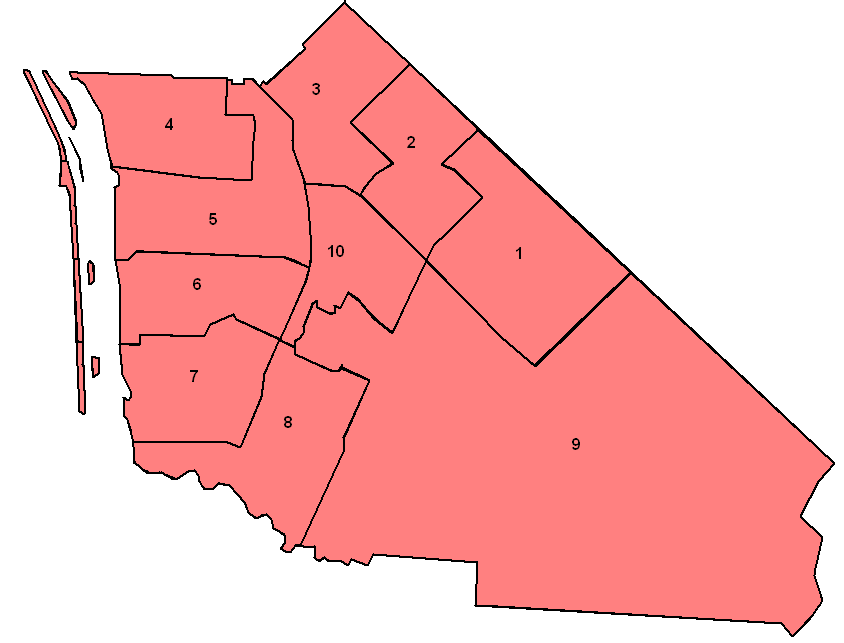
Jean Tremblay, who has been mayor of Saguenay since the city's amalgamation in 2002, is finally stepping down. There are four candidates running to replace him, the best known is former Conservative cabinet minister Jean-Pierre Blackburn who is running as an independent. There are two municipal parties running as well and are both running mayoral candidates. The older of the two parties is Équipe du renouveau démocratique (Democratic Renewal Team), which ran in the last election and won two seats. One of those seats was won by Josée Néron who is the party's mayoral candidate. The second party in the city is Parti des citoyens de Saguenay (Party of Saguenay Citizens), which was formed by Mayor Tremblay after the last election. Their mayoral candidate is Dominic Gagnon. Seven councillors who were elected as incumbents in 2013 joined this party and are running for re-election. Five independent councillors are running for re-election. Blackburn was originally going to run for this party, but had a falling out. A fourth candidate running is independent Arthur Gobeil, an accountant. Polling suggests Néron has a bit of a lead over Blackburn with Gagnon in a distant fourth, perhaps due to Blackburn's candidacy. Saguenay City Council has shrunk in size from 20 to 16 seats.

Saguenay's new electoral map

Lévis


Mayor Gilles Lehouillier of Lévis Force 10 is running for re-election against André Voyer who was a council candidate for the opposition Renouveau Lévis (Renewal Lévis) in 2013, but is running as an independent this time. Renouveau Lévis still exists, but is only running four candidates for council and are not running a mayoral candidate. Lévis Force 10 have already won 11 seats on council, as in 11 districts their candidates were the only ones to register. Lévis Force 10 did quite well in 2013 winning all but one seat on council, with an independent candidate winning the remaining seat.

Lévis' city council districts


Trois-Rivières


Trois-Rivières is the largest city in the province with no political parties. There was a fringe party that ran in 2013, but are not running any candidates this time. The city is led by mayor Yves Lévesque, who has been mayor of the city since amalgamation in 2002. The centre-right mayor was re-elected in 2013 over city councillor Sylvie Tardif with 49% of the vote to her 31%. This election, Lévesque is being challenged by city councillor Jean-François Aubin and André Bertrand. Trois-Rivières City council reduced in size from 17 to 15 seats. 

Trois-Rivières city council districts

Terrebonne

Long-time mayor and former Tory MP Jean-Marc Robitaille resigned in 2016 following corruption allegations in the fallout of the Charbonneau Commission. He was replaced as mayor by city councillor Stéphane Berthe. Robitaille's party (Équipe Robitaille) won all but two seats in the 2013 elections, but is no longer an active party for obvious reasons. 


Berthe is running for mayor under the new banner of Générations Terrebonne (Generations Terrebonne). Two incumbent city councillors will be running for his party, while the remaining incumbents will be running for Alliance démocratique Terrebonne (Terrebonne Democratic Alliance) whose mayoral candidate is Marc-André Plante. A third party was created called Nouvel Élan Terrebonne (New Spirit Terrebonne) and are also running a full slate of candidates, including Valérie Quevillon who is running for mayor. 

Terrebonne's city council districts
 

Saint-Jean-sur-Richelieu

In 2013, the race in Saint-Jean was a free-for-all after the departure of mayor Gilles Dolbec. Michel Fecteau was elected mayor of the city with just 22% of the vote, narrowly ahead of former BQ Member of Parliament Claude Bachand at 20%. Two other candidates were right behind Fecteau and Bachand: Alain Laplante won 19% of the vote, and Stéphane Legrand won 18%. The top three candidates in that election will once again face-off for the mayoralty of the city this time.


The council vote in 2013 was split between three parties. Fecteau's party (Parti Fecteau) won six seats on the 13 seat council; Despite finishing fourth in the mayoral election, Legrand's party (Vision Legrand) became the opposition with five seats. Équipe Alain Laplante won just one seat, while an Independent won the remaining seat. Bachand's party, Avec Bachand (With Bachand) was left off of council.

Saint-Jean's city council districts

Since 2013, Vision Legrand disbanded, with some of its councillors becoming independents and some joining Parti Fecteau. The one independent on council also joined Parti Fecteau. However, some Parti Fecteau councillors left that party. All in all, five incumbent councillors are running for Parti Fecteau, three are running for Équipe Alain Laplante and three are running as independents.


Brossard

Brossard has been led by mayor Paul Leduc from 1990 to 2001 and since 2009. He was re-elected in 2013 with 65% of the vote against his opponent, Louis Lemoine who won 35%. Leduc's party, Priority Brossard won all but two seats on council, while Lemoine's party, Brossard Revival winning the remaining two.


Leduc will once again be running for re-election. Brossard Revival's mayoral candidate is Jean-Marc Pelletier. In addition to those two, this year's mayoral race has expanded thanks to the addition of a new party, Brossard Ensemble (Brossard Together), led by former Priority Brossard councillor Doreen Assaad. She is joined on the ballot by former NDP Member of Parliament Hoang Mai who is running as an independent.

Brossard's city council districts

Five incumbent councillors will be running for re-election for Priority Brossard, two are running for Brossard Ensemble (both former members of Priority Brossard), while one councillor is running for re-election for Brossard Revival.


Repentigny

Long-time Repentigny mayor Chantal Deschamps (of Équipe Deschamps) is running for re-election. She will be challenged by councillor Bruno Villeneuve of Parti démocratique de Repentigny-Le Gardeur (Democratic Party of Repentigny-Le Gardeur). Last election, Deschamps won the mayoralty with 62% of the vote against her Parti démocratique opponent, Jean Langlois who won 38%. Deschamps' party won 12 of the 13 seats on council. Only Villeneuve was able to win a seat for Parti démocratique. With Villeneuve running for mayor, Parti démocratique have no incumbents running for re-election in any of the district seats. All incumbent councillors will be running for Équipe Deschamps.

 
Repentigny's city council districts

Other major cities:

- Drummondville:
Incumbent mayor Alexandre Cusson has been re-elected with no opposition. He was first elected in 2013. There are no parties in Drummondville.
- Saint-Jérôme: Incumbent mayor Stéphane Maher has also been re-elected with no opposition. He too was first elected in 2013. His party, Vision Saint-Jérôme is the only one contesting the election, and already have six councillors elected without opposition.
- Granby: Incumbent mayor Pascal Bonin is running for re-election against Yves Bélanger and Carl Bouvier. Bonin was first elected in 2013, when he defeated then-mayor Richard Goulet. There are no parties in Granby.
- Blainville: Blainville will see a re-match of the 2013 mayoral race between mayor Richard Perreault of Vrai Blainville (True Blainville) and Florent Gravel of Mouvement Blainville (Blainville Movement). Vrai Bainville won every seat on council in 2013.
- Saint-Hyacinthe: Incumbent mayor Claude Corbeil faces a challenge from Chantal Goulet. Corbeil was first elected in 2013. There are no parties in Saint-Hyacinthe.
- Mirabel: Incumbent mayor Jean Bouchard of Action Mirbael is challenged by two candidates; city councillor Pierre-Paul Meloche of Mouvement citoyen Mirabel (Mirabel Citizen Movement), an Action Mirabel defector, and René Plouffe who leads Renouveau Mirabel (Mirabel Renewal), who is only running one other council candidate. In 2013, Action Mirabel was the only party in the municipality, winning six of the nine seats. In this election, Action Mirabel are running five councillors for re-election, while Mouvement citoyen Mirabel has one incumbent councillor running.
- Shawinigan: Incumbent mayor Michel Angers is running for re-election against François Bonenfant and Judeline Corriveau. Angers has been mayor since 2009. There are no parties in Shawinigan.
- Dollard-Des Ormeaux: Incumbent mayor Edward Janiszewski is finally facing a credible opposition since being acclaimed to office in 2013. He is challenged by incumbent councillor Alex Bottausci and two other candidates. Janiszewski was first elected in 2005, and has never faced stiff competition for the job in his career. There are no parties in the city.
- Rimouski: Rimouski got a new mayor last year when its mayor, Éric Forest was appointed to the Senate. Forest was replaced by city councillor Marc Parent, who will be running to keep his job. He will be running against city councillor Pierre Chassé and two other candidates. There are no parties in Rimouski.
- Châteauguay: Châteauguay mayor Nathalie Simon of the Citizens' Action party is being challenged by Vision Châteauguay candidate Pierre-Paul Routhier and independent councillor Steve Brisebois. Simon has been mayor of the city since 2009. In 2013, the Citizens' Action party was the only party running, and won six of the nine seats on council. The remaining three independents formed the new Vision Châteauguay party, and with one floor-crosser have four city councillors running for re-election against just three for Citizens' Action.
- Mascouche: Incumbent mayor Guillaume Tremblay of Vision Démocratique de Mascouche (Democratic Vision of Mascouche) is being challenged by two independent candidates, François Collin and Line Lavallée. Tremblay was first elected in 2013, when his party won every seat on council defeating Équipe Luc Thériault. Now, Vision Démocratique is the only party in the city, and have already won six seats on council due to acclamations.
- Victoriaville: Former BQ Member of Parliament André Bellavance was easily elected in a rare mayoral by-election in 2016. He will be running for re-election against Jean Roy. There are no parties in Victoraville.
- Saint-Eustache: Incumbent mayor Pierre Charron of Option Saint-Eustache is being challenged by city councillor Julie Desmarais or Renouveau Saint-Eustache (Renewal Saint-Eustache) and Robert St-Germain of Accès Saint-Eustache (Access Saint-Eustache). Charron has been mayor since 2005, and was easily elected in 2013 when his party was the only one in town. His party won all but two seats on council. One of those two his party did win was won by Desmarais, who ran as an independent. All but one incumbent councillor running for re-election is running for Option Saint-Eustache, with the remaining councillor running as an independent.
- Rouyn-Noranda: Incumbent mayor Mario Provencher is running for re-election, and will be challenged by four other candidates. Provencher was first elected in 2009, and was easily re-elected in 2013 with 80% of the vote. This time he faces stiff opposition from city councillors Diane Dallaire and Philippe Marquis. There are no parties in Rouyn-Noranda, though Provencher had his own party in 2013 where he was the only candidate.
- Boucherville: Incumbent mayor Jean Martel is running for re-election against Monique Reeves. Martel has been mayor of the city since 2009, and leads the only party in the city, Option Citoyens Citoyennes (Citizens Option). In 2013, his party won every seat on city council. In this election, his party has already won two seats due to acclamation. Every incumbent running for re-election, save one is running for his party, while one incumbent is running as an independent.
- Sallaberry-de-Valleyfield: Long-time mayor Denis Lapointe is not running for re-election, leaving this race open. City councillor François Labossière is running against Joanne Brunet and Miguel Lemieux. There are no parties in Valleyfield.
- Vaudreuil-Dorion: Mayor Guy Pilon of Parti de l'Action de Vaudreuil-Dorion (Vaudreuil-Dorion Action Party) is running for re-election against Pierre Séguin, leader of “Team we are”. In 2013 Parti de l'Action was the only party running, and won all but one seat on council.


Prefectural races

Among the 16 races for regional county municipality (RCM) prefects, the two largest RCMs are Montcalm and Les Pays d'en Haut, both of which are located north of Montreal. In Les Pays d'en Haut, Wentworth-Nord mayor André Genest takes on Martin Nadon, Marie-Claire Vachon and Guy Vandenhove for the top job. In Montcalm, Saint-Calixte mayor Louis-Charles Thouin has been acclaimed as prefect.

Polls close across the province at 8pm.

Monday, April 11, 2016

Chicoutimi by-election charts and maps

Today, there is a provincial by-election in the riding of Chicoutimi in Quebec. The riding has been vacant since last October when PQ MNA Stéphane Bédard resigned his seat.

The riding of Chicoutimi, located in northeastern Quebec has been a PQ stronghold since 1973. It consists of the former city of Chicoutimi, which is now part of the city of Saguenay. The riding is one of the most nationalist in Quebec, voting yes in both the 1980 and 1995 referendums by large margins.

I have been quite busy lately, so I haven't had the chance to do my usual by-election profile. The riding should be an easy PQ hold though, so it shouldn't be that interesting of a race.  The PQ is running businesswoman Mireille Jean as their candidate. Polls show her as the clear front runner.

Despite not having the time to do a write up, I have made plenty of charts and a map...


As you can see, the PQ won most of the riding in 2014, though the Liberals were strong in the southern and eastern suburbs. The CAQ won one poll as did Saguenay councillor Marc Pettersen, who ran as an independent.

Here are the results by city council district for the last provincial and federal elections:

2014 provincial election in Chicoutimi - results by municipal district

2015 federal election in Chicoutimi - results by municipal district


The following chart shows the vote progression of the riding since 1989. The boundaries have not shifted since then.


Chicoutimi vote progression

And finally here is a list of the MNAs who have represented Chicoutimi since confederation:


Polls close at 8pm.

Sunday, November 3, 2013

Quebec municipal elections today

Municipal elections are being held across the province of Quebec's 1,111 municipalities today. Voters will elect mayors, and municipal councillors and in some municipalities, borough mayors and borough councillors as well. In many of Quebec's municipalities- including its 11 largest cities, local political parties will be contesting for seats their respective councils. Elections in those cities are all about the parties trying get a majority of seats on their councils. Most councils are elected using the first past the post electoral system.

Individual parties in Quebec municipalities are usually short lived operations, and often groups pledging support behind one particular mayoral candidate. This can easily be seen in their names, such as “Equipe Denis Coderre pour Montreal” (Team Denis Coderre for Montreal). If parties are unsuccessful they will often disband as soon as the election is over, and new ones will be created for the next. Municipal parties can sometimes be ideological, but are often just supporters of a particular mayoral candidate. None have official ties to federal or provincial parties, but many often draw their support from the same voters.

It has not been a good four years for municipal politicians in Quebec. Corruption scandals have plagued the mayorships in both Montreal and Laval. In Montreal, Mayor Gerald Tremblay resigned in November of 2012 following corruption allegations, and was replaced by Michael Appelbaum, who became the city's first Jewish mayor. However, Appelbaum was no saint either, and was arrested in June after charges of fraud, conspiracy, breach of trust and corruption. Applebaum would then be replaced by Laurent Blanchard, who has survived until now as mayor. In Laval, Mayor Gilles Vaillancourt who had been mayor for 24 years, and whose party held every seat on council also resigned in the Fall of 2012 following allegations of corruption. In May, Vaillancourt was arrested and charged with gangsterism. Vaillancourt's successor Alexandre Duplessis also left office, in May, also following corruption allegations, when he asked for the city to be placed under trusteeship. Nearly the entire council was implicated in the Charbonneau Commission in May for corruption. Since May, the mayor of Laval has been Martine Beaugrand. She was one of only two councillors to have not been implicated in the Charbonneau Commission.


Montreal

Montreal's municipal districts


The 2013 election marks the beginning of a new era in Montreal civic politics. Gerald Tremblay had been mayor of the city for 10 years before his resignation in 2012. Also gone with him was his political party, the centrist Union Montreal which formally dissolved in May. The party had won a majority of seats on Montreal City Council in the last election- 38 of 65. When the party dissolved, most of the members became independents before reorganizing into the new political parties.

Current incumbent city councillors


At present there are eight political parties represented on Montreal City Council, five of which are single-borough parties (they only run candidates in one specific borough of the city) and three hold seats in multiple boroughs. Those three parties are Equipe Denis Coderre pour Montreal (Team Denis Coderre for Montreal), Coalition Montreal, and Projet Montreal (Project Montreal). Each of those three parties are led by a leader who is also each party's mayoral candidate. Each mayoral candidate runs in a typical city-wide mayoral race, but also has a home district that they run in. Should a mayoral candidate lose the mayoral race, they can still sit in council if they are elected in their district. If a candidate is elected mayor, then their “running mate” (also known as “co-candidate” or “fellow candidate”) becomes councillor of their district, if the mayoral candidate also wins their district.

Montreal City Council is made up of 65 members, which includes a mayor, elected city wide, 18 borough mayors elected from 18 of the 19 boroughs (Ville-Marie has no borough mayor) and 46 councillors elected from 46 districts across the city. In addition, Montreal voters will be electing 38 separate borough councillor positions. These separate borough councillors are not members of city council, but often represent the same parties. Some boroughs have their city councillors as also borough councillors, and therefore do no have separate borough councillors.

Equipe Denis Coderre is the party of former federal Liberal MP Denis Coderre who resigned his seat in the House of Commons in June to concentrate on his bid for mayor. His party is mostly made up of former Union Montreal members, as both parties are generally aligned with the Liberals. Equipe Coderre's incumbent councillors are mostly from areas that are strong Liberal areas (such as the north end), with high percentages of Anglophones and Allophones. His party currently holds 17 of the 65 seats on council. Coderre is running in Ovide-Clermont District which is in Montreal-Nord borough, the same area he represented as an MP. Currently, his party is the largest on council, and Coderre is leading the polls in the race for mayor. A CROP poll from October 15 showed him at 41%.

Coalition Montreal is a new party which formed in July to support the mayoral bid of Marcel Cote, an economist and founding partner of SECOR. The 71 year old Cote ran for the Union Nationale in 1973, but has since worked for former Quebec Premier Robert Bourassa and Prime Minister Brian Mulroney. His past affiliations indicate that Cote is a centre-right candidate, but his party comes from a merger of independents and Vision Montreal, which was a centre-left party that formed the official opposition on Montreal City Council in 2009. Vision Montreal had attracted mostly sovereigntist voters, who backed the mayoral candidacy of Vision's leader, Louise Harel- a hardcore separatist (and former PQ MNA) whose English skills were poor. Not surprisingly, most of Coalition Montreal's incumbent candidates are from the east end of the city, which is where sovereignty has the most support. But it should be noted that it is not a separatist party, and Cote has few connections to the movement. Cote is running in the district of Cote-des-Neiges, which is currently held by Equipe Coderre councillor Helen Fotopulos. The October CROP poll pegged Cote in 4th place at 11%.

Projet Montreal is the left wing party on Montreal City Council, and has been active since 2004. The party won just one seat in the 2005 municipal election, but increased to 10 seats in 2009. For the third election in a row, their mayoral candidate in Richard Bergeron, the city councillor from Jeanne-Mance in Le Plateau-Mont-Royal Borough, and represented De Lorimier District from 2005 to 2009. Bergeron has come under fire in the past for being associated with the 9/11 truther movement, but despite this is still relatively popular with his urban progressive base. His party currently holds 10 seats, 8 of which are located in the central part of the city. Bergeron will be running in a new district this time, in Saint-Jacques District in Ville-Marie borough, a seat currently held by Coalition Montreal's Francois Robillard. Interestingly, Beregeron's co-candidate is Stephane Dion's wife, Janine Krieber. The CROP poll has Bergeron in 3rd place with 21%.

There is a fourth party that has no seats on Montreal City Council, but whose mayoral candidate may very well finish second. This party is known as “Vrai changement port Montreal” (Real Change for Montreal). The party is generally centre-left, and is led by lawyer Melanie Joly. Joly has most recently served as chief organizer of Justin Trudeau's Liberal leadership campaign last Spring. While she was excluded from the debates, her candidacy has picked up steam, with the CROP poll giving her 24%, which would put her in second place. Joly is running in Notre-Dame-de-Grace, which is currently held by Projet Montreal councillor Peter McQueen. Unlike the other three parties, Vraie changement is not running a near-complete slate, as they are only running in 35 seats.

Outside of the “big four”, there is one other municipal party, Integrite Montreal (Integrity Montreal), led by Michel Brule. They are running in 23 seats. There are also seven independents running for mayor, Claude Blais, Louai Hamida, Paunel Paterne Matondot, Clement Sauriol, Kofi Sonokpon, Patricia Tulasne and Joseph Young. Outside of this, there are 8 parties that are running candidates in lone wards, five of which have sitting councillors. They are Equipe Andree Champoux pour Verdun (in Verdun), Equipe Anjou (in Anjou), Pro action LaSalle (in LaSalle), Equipe conservons Outremont (in Outremont), Equipe Dauphin Lachine (in Lachine), Equipe Richard Belanger (in L'Ile-Bizard-Sainte-Genevieve), Option Verdun (also in Verdun), and the LaSalle Alternative Party (also in LaSalle). Currently, Equipe Anjou, Equipe Belanger, Equipe Dauphin, Pro action LaSalle and Equipe conservons Outremont all hold at least one seat on Montreal City Council. It is indeed possible that there may be at least nine different parties elected tonight.


Results of the 2009 council election


Quebec City

Quebec's provincial capital has been led by mayor Regis Labeaume since a mayoral by-election was held in 2007 following the death of the previous mayor, Andree Boucher. Labeaume is extremely popular, and is widely expected to win once again. His party, the conservative Equipe Labeaume (Team Labeaume) won all but two seats in the 2009 municipal election. Labeaume himself won 80% of the vote. 

Quebec City's 21 Districts


The 2009 election saw the Quebec City electoral map with 27 districts, but the map has been reduced to 21 districts. The city also has six boroughs, but there are no separately elected borough positions. Voters will have one vote for mayor, and one vote for their city councillor.

In 2009, Labeaume and his party faced little opposition. His main mayoral rivals were libertarian radio host Jeff Fillion who won just 8.5%, and Yonnel Bonaventure, leader of Defi Vert de Quebec, the municipal green party- who won 8.1%. On Council, Labeaume's only opposition came from two independent candidates who were elected from the city's central borough, La City-Limoilou. Opposition parties won no seats.

Results of the 2009 council election


Since the 2009 election, Labeaume has campaigned against city unions, and changes in labour laws. His conservative policies have proven quite popular in the centre-right leaning capital. However, his policies have also alienated the left, which is rallying behind the candidacy of David Lemelin, the leader of Democratie Quebec (Democracy Quebec City). His party includes the two independents who won seats in 2009, as well as two defectors from Equipe Labeaume. Polls suggest Labeaume will win in a landslide; Leger released a poll on October 24 that showed Labeaume ahead of Lemelin 67-18 in the mayoral race and Equipe Labeaume ahead of Democratie Quebec 58-21 in the council race.

There are three other candidates running for mayor of Quebec City; Claude Gagnon, Denis Hache and Armand Pare. There is a third party in the city, “Alliance de Quebec” that is only running candidates in Beauport borough. One councillor has already been elected- by acclamation, Steeve Verret of Equiple Labeaume in Lac-Saint-Charles-Saint-Emile District.


Laval

Laval's 21 Districts


Laval is the third largest city in Quebec, and Montreal's large northern suburb. Like Montreal, Laval's election this year will mark a new beginning for the city which has been ruled by Gilles Vaillancourt for over two decades. With only two members of the 22 member city council not being named in the Charbonneau commission, the city will be electing a nearly-brand new council. Perhaps a well needed fresh start for the city.

In 2009, every single district of Laval voted for the party of Gilles Vaillancourt, Parti PRO des Lavallois. Only one district, Saint-Bruno in the central part of the city was close. Vaillancourt himself won 61% of the vote. Two parties ran against him, Mouvement lavallois, led by Lydia Aboulian and Parti au service du citoyen, led by Robert Bordeleau. In the mayoral election, Aboulian won 23% of the vote, and Bordeleau won 15%. 

Results of the 2009 council election


There will be five parties contesting the mayorship of Laval. The race will be open, as current mayor Martine Beaugrand has opted to not run for re-election. One councillor will be running for mayor, Claire Le Bel- who leads the Option Laval party. Her political career has been vindicated had recorded one of her meetings with Vaillancourt which was used in the Charbonneau commission, although she is not without baggage, as her former campaign manager has been charged with making a false accusation. Laval's #2 party in 2009, Mouvement lavallois (Laval Movement) will be running again, with police officer Marc Demers as their mayoral candidate. He has previously run for the PQ and there is also some controversy over whether or not he is eligible to be mayor, as he had lived outside of Laval for six months in 2012. The third major party running is Action Laval, led by Jean-Paul Gobe. Gobe is a former Liberal MNA who has since distanced himself with the party.


Laval's #3 party in 2009, Parti au service du citoyen (Party serving the citizen) is also running again. Its mayoral candidate is once again Robert Bordeleau, who has come under scrutiny for owing taxes to Revenu Quebec. The fifth party running is Nouveau Parti des lavallois (New Laval Party), led by Guy Landry. Landry has also come under scrutiny for being asked to repay $40,000 in social assistance money and having half of his candidates leave. Also running for mayor are four independents, Jacques Foucher, Helene Goupil Nantel, Regent Millette and Marc-Aurele Racicot. For city council, there are only three incumbent councillors running, all as independents.

For what it's worth, Leger published a poll October 22 showing Demers in the lead with 21%, Le Bel in second with 14% and Gobe in third with 10%.


Gatineau

Gatineau's 18 Districts


Across the river from Ottawa is Gatineau, Quebec's fourth largest city. And for the first time that I know of, Gatineau will have a municipal political party running a slate in an election. Gatineau's current mayor is Marc Bureau, who has served as mayor since defeating the previous mayor, Yves Ducharme in 2005. Marc Bureau, and the majority of the Gatineau City Council are independents. Bureau has led the city with a pragmatic approach, and is vaguely centre-left.

Bureau is being opposed by a new left wing party known as “Action Gatineau”. Action Gatineau is led by Buckingham city councillor Maxime Pedneaud-Jobin. The party will be running a full slate of candidates, including three incumbents, Stefan Psenak in Aylmer, Andre Laframboise in Lucerne, and Mireille Apollon in Oree-du-Parc. It will be interesting to see how citizens of Gatineau react to having a political party on the ballot for the first time.

After Bureau and Pedneaud-Jobin, the third main candidate for mayor in Gatineau is Jacques Lemay, a former fire chief for the city. Also running for mayor is Francois P. D'Aoust. Segma Research released a poll of the race on October 23 that showed Bureau well out in front with 51%, Peneaud-Jobin at 34%, Lemay at 13% and D'Aoust at 2%. For council, Action Gatineau is polling at 30%, compared to 33% for independents. That is not a bad poll number for the new party.


Longueuil

Longueuil's 15 Districts


Quebec's fifth largest city is Longueuil, a South Shore suburb of Montreal. Since 2009, its mayor has been former Bloc Quebecois MP Caroline St-Hiliare. St-Hilaire won the 2009 election, defeating Jacques Goyette of the Parti municipal de Longueuil after he suffered from allegations of improriety. Parti municipal had previously governed the city for 27 years. St-Hilaire's victory was in the form of a minority, as her party, Action Longueuil won just 12 of 27 seats and prevented her from passing her first proposed budget.

During the last 4 years, St-Hilaire's opposition has faded away, and now Parti municipal de Longueuil no longer exists. The only opposition party running candidates in this election is Option Greenfield Park, which is only running in Greenfield Park Borough. They have just one incumbent running. St-Hilaire's only opposition for the mayoralty is from Pardo Chiocchio, a businessman and former president of the South Shore Italians Association.

The size of the Longueuil City Council is being reduced. The 2009 election was fought over 26 Districts, while this election will be fought over just 15. Despite this, there were three districts where the candidates were elected unopposed. Sylvie Parent was elected in Fatima-du Parcours-du-Cerf District, France Dube was elected in Parc-Michel-Chartrand District and Stephane Richer was elected in Des Explorateurs District.


Sherbrooke

Map of Sherbrooke's electoral districts


Now to Sherbrooke, the capital of the Eastern Townships. The Mayor of Sherbrooke is Bernard Sevigny. He has been mayor since 2009, when he defeated Helene Gravel by just 122 votes. His prospects for this election look a lot brighter, however as he has weak opposition.

Sevigny leads the Renouveau sherbrookois (Renewal Sherbrooke) party. His party's only opposition comes from “Comme une eau Terre” (Earth as Water; play on words, as it sounds like the French word for “Community), a local green party. There are two independents running for mayor, Roy Patterson and Denis Pellerin.

Council is Sevigny's biggest problem. Last election, he only won a minority of seats, but has since picked up some independents. In total, 10 independent councillors are running for re-election, compared to seven for Renouveau sherbrookois. In total there are 20 council seats. In addition, two boroughs (Brompton and Lennoxville) elect separate borough councils.


Saguenay

Map of Saguenay's 19 Districts


In Saguenay, the city which includes the former cities of Chicoutimi, Jonquiere and La Baie, there is a race between independent mayor Jean Tremblay and the opposition party, Equipe du renouveau democratique (Team Democratic Renewal) led by retired accountant Paul Grimard. Tremblay has been mayor of Saguenay since amalgamation in 2002, and before that he was mayor of Chicoutimi since 1997.

Grimard's opposition party is running in 18 of Chicoutimi's 19 districts. However, no incumbent councillor represents the party.


Levis

Map of Levis' 15 Districts

Across the St. Lawrence from Quebec City is the suburban city of Levis. The incumbent mayor, Danielle Roy Marinelli will not be running for re-election. Running to replace her are six candidates, three independents and three candidates representing political parties.

The governing party in Levis is Levis Force 10. They are running Gilles Lehouillier as their mayoral candidate. The only other party running a full slate of candidates is Renouveau Levis (Renewal Levis) who are running Antoine Dube as their mayoral candidate. There is also Action Levis, who is running Andre Jean as their mayoral candidate. Only Levis Force 10 is running any incumbent councillors.


Trois-Rivieres

Map of Trois-Rivieres' 16 Districts


Trois-Rivieres, in central Quebec is led by independent mayor Yves Levesque. The centre-right mayor has led the city since 2002. He is facing opposition from one opposition party and two city councillors who were in an unofficial group of councillors who would often oppose the mayor.

The only party running candidates in Trois-Rivieres is Force 3R, a fringe centre-right party. They will be running candidates in 10 of the 16 districts in the city, as well as a mayoral candidate, Richard St-Germain. The two city councillors running are Sylvie Tardif (Marie-de-l'Incarnation District) and Catherine Dufresne (Sainte-Margeurite District). Both candidates are on the left, and are accusing each other of splitting the vote. Two other candidates are running for mayor, Pierre Benoit Fortin and Marcelle Girard.


Terrebonne

Map of Terrebonne's 16 Districts


This Montreal North Shore suburb is led by mayor Jean-Marc Robitaille. The former Tory MP has been mayor of the city since 1997. His party, Equipe Robitaille (Team Robitaille) forms the government on city council. Robitaille is being opposed by Antoine Hanachian and Renouveau Terrebonne (Renewal Terrebonne) which has no incumbent councillors running. Two districts (4 & 15) have been acclaimed, with the Equipe Robitaille candidates running unopposed there.


Saint-Jean-sur-Richelieu
Map of Saint-Jean-sur-Richelieu's 12 Districts


This city southeast of Montreal is seeing eight strong mayoral candidates and six political parties that all have a chance of winning seats. The huge amount of candidates is caused by the incumbent mayor Gilles Dolbec leaving municipal politics, and a free-for-all to take his place.

Perhaps the most notable candidate for mayor of Saint-Jean is Claude Bachand, a former BQ MP. He leads the Avec Bachand (With Bachand) party. Three city councillors are also running for mayor, Alain Laplante (Equipe Alain Laplante [Team Alain Laplante]), Stephane Legrand (Vision Legrand) and Alain Paradis (Equipe Paradis [Team Paradis]). There are two other parties, Parti Fecteau (Fecteau Party, mayoral candidate: Michel Fecteau) and Action civique (Civic Action, mayoral candidate: Jean Lamoureux). Independents running for mayor include Michel Gauthier, Khaled Kalille and Paul Turcotte. Five of the six parties are also running full slates on city council, meaning each district has at least 5 candidates. Only Action civique is not running a full slate, but they are running in 10 of the 12 districts.


Repentigny

Repentigny's 12 Districts


North of Montreal is the suburb of Repentigny. The mayor of Repentigny is Chantal Deschamps, who has been in power since 1997. Her party is Equipe Deschamps (Team Deschamps) which holds a majority on council. She is being opposed by Jean Langlois, the mayoral candidate for Parti democratique de Repentigny-Le Gardeur (Repentigny-Le Gardeur Democratic Party). Parti democratique is running one incumbent councillor, in District 9, Serge Gauthier. The rest of the incumbents running are in Equipe Deschamps, except for an independent running for re-election in District 12, Sylvie Langlois Brouillette.


Brossard

Brossard's 10 Districts


On the South Shore of Montreal, next to Longueuil is Brossard. Brossard's mayor is Paul Leduc. Leduc has been mayor of Brossard since 2009 and was also mayor from 1990 until 2001, when the city was briefly amalgamated into Longueuil. Leduc's party is Priority Brossard, which is also the governing party on city council. Leduc is opposed by Brossard Revival, whose mayoral candidate is Louis Lemoine, the executive vice president of a sustainable energy company. Brossard Revival has no incumbent councillors in the election.


Other major cities:

  • Drummondville: Alexandre Cusson is running against Camille Desmarais for mayor. Neither sit on council. There are no parties in Drummondville.
  • Saint-Jerome: Two councillors are running for mayor, Alain Langlois (Independent) and Martin Pigeon (Ensemble Saint-Jerome). Also running are Yves Charette (Union des citoyens) and Stephane Maher (Vision Saint-Jerome). There is only one incumbent councillor running for re-election, who is running for Vision.
  • Granby: Granby mayor Richard Goulet is running for re-election. Two councillors are running against him, Pascal Bonin and Etienne Jenneau. Also running are Carl Bouvier, Louise Bruneau and Denny O'Breham. There are no parties in Granby.
  • Blainville: Councillor Richard Perreault is running for mayor, representing the governing party of the city, Vrai Blainville. Running against him is the leader of Mouvement Blainville, Florent Gravel.
  • Saint-Hyacinthe: Three candidates are running for mayor, Claude Corbeil, Pierre Rheaume and Gaston Vachon. None are sitting councillors. There are no parties in Saint-Hyacinthe.
  • Shawinigan: Mayor Michel Angers is being challenged by Yves Gelinas and Ronald St-Onge Lynch for the mayorship. There are no parties in Shawinigan.
  • Dollard-Des Ormeaux: Incumbent mayor Edward Janiszewski has been acclaimed back into office. There are no parties in DDO.
  • Rimouski: Incumbent mayor Eric Forest has also been acclaimed back into office. There are no parties in Rimouski either.
  • Chateauguay: Mayor Nathalie Simon is running for re-election, representing the Citizens' Action party which is the governing party in Chateauguay. She is being opposed by Independent candidate Steve Brisebois.
  • Saint-Eustache: Mayor Pierre Charron is running for re-election representing Option Saint-Eustache, the governing party of the city. His opponent in the mayoral election is Independent city councillor Denis Pare.
  • Victoriaville: Mayor Alain Rayes has been acclaimed into office with no opposition. There are no parties in Victoriaville.
  • Mascouche: Running for mayor in Mascouche is Luc Theriault of Equipe Luc Theriault, Guillaume Tremblay of Vision democratique de Mascouche and Independent Pierre Nevraumont. None of the parties have any incumbent councillors running. Only two incumbent councillors are running, and they are both independents.
  • Mirabel: Two city councillors are running for mayor in Mirabel, Jean Bouchard of Action Mirabel and Independent Luc St-Jean. Also running are Independents Felix Daoust and Rene Plouffe. Action Mirabel is the governing party in the city.
  • Rouyn-Noranda: Running for re-election in Rouyn-Noranda is mayor Mario Provencher whose party in Equipe Mario Provencher. However, his “party” has no candidates, and there are no other parties. Running against him is Vuyani Gxoyiya and Richard St-Michel.
  • Boucherville: Mayor Jean Martel is running for re-election against city councillor Francine Crevier Belair. Martel's party, Option citoyen(nes) is the governing party on council. Crevier Belair is an independent.
  • Salaberry-de-Valleyfield: Mayor Denis Lapointe is running for re-election against councillor Robert Savard. There are no parties in Salaberry-de-Valleyfield.
  • Sorel-Tracy: Incumbent Mayor Rejean Dauplaise is facing competition from three city councillors trying to replace him, Corina Bastiani, Michele Lacombe Gauthier and Gilles Lemieux. Three other candidates are running in the crowded field, Andre Mandeville, Serge Peloquin and Jean Tremblay. The only party running candidates is Parti d'aujourd'hui, whose mayoral candidate is Corina Bastiani. No incumbent councillors are running for that party however.


That's all the time I have for now. Polls close tonight at 8pm Eastern.