Showing posts with label 2012. Show all posts

Wednesday, October 26, 2016

2016 Saskatchewan municipal elections today

Voters in Saskatchewan's urban municipalities and odd-numbered rural municipalities head to the polls today to vote in local elections across the province's 16 cities, 146 towns, 260 villages and 154 of the province's 296 rural municipalities to elect new mayors and councils. Additionally, voters will also be voting in school board elections to elect school trustees for Saskatchewan's 28 school divisions (of which 19 are public, eight are Catholic and one is French). Since the last elections in 2012, Saskatchewan's municipal elections are now held every four years instead of three.

Here is a look at the elections in Saskatchewan's three largest cities:


Saskatoon


The most exciting mayoral race in the province will be in the province's largest city of Saskatoon. There are three main candidates running for mayor, and polls are showing a close three-way race between them. The front-runner is mayor Don Atchison, who has been mayor of the city since 2003. Atchison, an outspoken conservative, could squeak out a victory thanks to a split in the vote on his left between his main two rivals: city councillor Charlie Clark and businesswoman Kelley Moore. Clark, who has NDP connections, is the more progressive of the candidates, and represents the city's most left wing ward, Ward 6, which covers the Downtown and Nutana neighbourhoods of the city. Moore on the other hand is running on a more centrist platform, highlighting fiscal responsibility and sustainable planning in her platform. Both Mainstreet Research and Insightrix have released recent polls of the race, and show contradictory results. Both pollsters show Atchison with the lead; Mainstreet gives Atchison 38% and Insightrix has him at 35%. Both pollsters differ on who is in second place, though. Mainstreet has Clark in second place at 33%, while Insightrix has Moore in second place, just one point behind Atchison at 34%. Mainstreet puts Moore further behind at just 25%, while Insightrix has Clark in a close third place at 30%. These contradictory poll numbers mean that it will be difficult for anti-Atchison voters to pick a candidate if they want to get rid of the mayor. On the other hand, it may trigger centrist Moore supporters to vote Atchison to stop Clark.

Main mayoral candidates in Saskatoon
The 2012 election in Saskatoon was also an exciting race, but between just two main candidates: Atchison and public servant Tom Wolf. Wolf, a public servant, ran on a pragmatic centre to centre-left platform. Atchison squeaked out a narrow five-point victory over Wolf, and the two candidates split the city's ten wards, with each candidate winning five. Atchison won the five suburban wards located on the southern, eastern and northern edges of the city, with his best ward being Ward 9 in the city's southeast corner, picking up 61% of the vote there. Wolf's best ward was Ward 6 in the centre of the city, where he won 60% of the vote. 


Looking at Saskatoon's city council race, there are three wards which will have open races with no incumbents: Ward 6 (Charlie Clark's seat), Ward 8 and Ward 9. The incumbent in Ward 8 was Eric Olauson, who was elected in the provincial election earlier this year for the Saskatchewan Party. The incumbent in Ward 9 is Tiffany Paulsen who had run for the Liberal Party in the 2004 federal election. The ward map for 2016 has changed slightly, as the city has annexed some new territory.

Map of Saskatoon's 10 wards


Regina


Unlike the race for mayor of Saskatoon, the mayoral election in Regina has been more of a snooze-fest. One-term incumbent mayor Michael Fougere is set for a landslide election, as is customary for popular mayors heading into their second elections. The conservative-leaning Fougere had been a long time city councillor representing Ward 4 in the southeast corner of the city. He was first elected as mayor in 2012 with just 42% of the vote, thanks to a split in the progressive vote between candidates Marian Donnelly and Meka Okochi. Fougere won seven of the city's ten wards en route to his re-election, while Donnelly won the remaining three. The seven wards that Fougere won are all located in the city's more conservative-leaning suburbs, while Donnelly won the city's three inner-city wards. Fougere's best ward (and the only one where he won a majority of the vote) was his home Ward 4, where he picked up 58% of the vote. Donnelly's best ward was Ward 3, which covers the city's Downtown. Donnelly would win 55% of the vote there compared to just 20% for Fougere. Okochi's vote was generally even across the city, and he failed to win any wards.

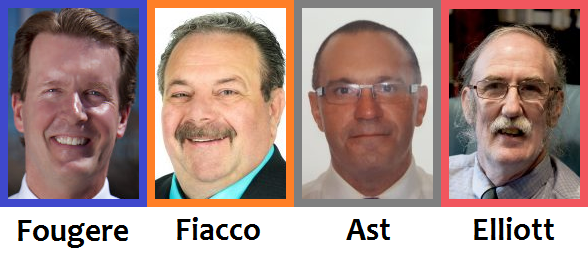
Main mayoral candidates in Regina
For 2016, Fougere should have no problem winning every ward in the city, if the only poll of the race is to be believed. A Mainstreet Research poll conducted earlier this month showed Fougere way ahead at 73%, while his four opponents are all in single digits. His main opponent will likely be Tony Fiacco, brother of former mayor Pat Fiacco and former Saskatchewan Party candidate. The left wing vote will be split between three candidates: businessman Wayne Ast, perennial mayoral candidate Jim Elliott and former Green Party candidate and topless rights activist Evangeline Gordron. The Mainstreet poll put Fiacco at 9%, Ast and Elliott at 8% and Godron at 2%.


Regina City Council has 11 seats, with ten ward councillors plus the mayor. Of the ten wards, just two will have open races with no incumbents: Wards 3 and 6. Of note, Ward 6 has a total of 9 candidates running. The city of Regina annexed some new territory since the last election, and as such the ward map was tweaked slightly.

Map of Regina's 10 wards

Prince Albert


Prince Albert mayoral candidates
In Prince Albert, one-term mayor Greg Dionne is being challenged by Ward 6 city councillor Martin Ring, peace advocate Conrad Burns and former junior hockey player Josh Morrow whose campaign has been criticized for being “Trump” like for its “American-style” incivility. Dionne, who was a city councillor before becoming ways, was first elected to lead council in 2012 when he defeated then-incumbent mayor Jim Scarrow by nearly 1100 votes. Dionne won every ward in the city, doing especially well in the more NDP-friendly wards (1, 2, 3 and 4), which cover the northern and central parts of the city. His best ward was Ward 1, where he won 58% of the vote. His worst ward (and Scarrow's best ward) was Ward 5, where he still beat Scarrow by a 47-44% margin. His worst wards are all located in parts of the city that tend to vote for the Conservatives in federal elections and the Saskatchewan Party in provincial elections.


Prince Albert's city council has nine seats (eight councillors plus the mayor). Wards 6 and 7 have no incumbents running for re-election as Ward 6 councillor Martin Ring is running for mayor and Ward 7 has been vacant since January when its representative resigned for personal reasons. Ward 8 will have no election, as councillor Ted Zurakowski has been acclaimed.

Map of Prince Albert's 8 wards


Polls close at 8pm Central Standard Time in most municipalities. Saskatchewan doesn't have daylight saving time, so there is a 2 hour difference, meaning the polls close at 10pm Eastern.


Saturday, October 15, 2016

Nova Scotia municipal elections today

Today is election day across Nova Scotia's 51 municipalities, as voters go to the polls to elect new mayors, councils and members of the province's eight school boards.

Since the last election held in 2012, the province has reduced the number of municipalities from 54 to 51. This is because on April 1 2015, three municipalities were annexed by their surrounding municipalities. Bridgetown was annexed by the County of Annapolis, Springhill was annexed by the County of Cumberland and Hantsport was annexed by the District of West Hants. The topic of amalgamations and annexations of municipalities in the province continues to be a heated debate as municipalities must wrestle between shrinking tax bases and providing adequate services. A flashpoint in this debate came earlier this year when voters in Pictou County rejected the idea of amalgamating the county's municipalities in a plebiscite by a 66%-34% margin.


Map of Nova Scotia's 51 municipalities

Background


Nova Scotia's municipalities can be divided into three types: Regional Municipalities, Towns and Municipal Districts/Counties. Nova Scotia hasn't had any incorporated cities since a series of amalgamations in the 1990s. There are three Regional Municipalities in the province, including the two largest municipalities, Halifax and Cape Breton. These are unlike the Regional Municipalities in Ontario, for example, in that there are are no lower levels of government in those areas. They are quite large in size, having been created out of the former counties that existed in their place. Each of the three regional municipalities are headed by a mayor, elected at-large and have a number of councillors elected from “districts” (usually called wards in other provinces).

The second form of municipalities are towns, which are very small in geographic size compared to the regional municipalities and the counties and municipal districts. There are 27 towns in Nova Scotia. Each are headed by mayors, elected at-large and have a number of councillors.

The final form of municipalities are the counties and municipal districts. The only difference between counties and municipal districts are that the municipal districts are generally smaller than the counties, having been created out of counties themselves. However, their form of government is much the same. There are nine county municipalities in Nova Scotia and 12 municipal districts. All but two of these jurisdictions are headed by wardens, while the remaining two (Lunenburg District and Colchester County) are headed by mayors, elected at large. In this election, Kings County will elect its mayor for the first time, ditching the old warden-council system. Municipalities with the warden-council system have the wardens elected from among the elected councillors by the councillors themselves. Each county and municipal district are divided into a number of districts from which their councillors are elected.

 Elections in major municipalities


 Halifax 

Mayoral candidates
 In the Halifax Regional Municipalty (recently re-branded as just “Halifax”), Atlantic Canada's largest city, the result of today's mayoral election is a foregone conclusion. Mayor Mike Savage, the former Liberal MP for Dartmouth—Cole Harbour (2004-2011) has finished his first term as mayor of the city, and will likely enjoy being re-elected into a second term in the same fashion that most mayors are re-elected in Canada for their second terms, that is in a large landslide. He is only being challenged by one opponent, businesswoman Lil MacPherson who is challenging the centrist mayor from his left. She is the owner of a local organic restaurant. Only one poll of the race was conducted, back in the summer, showing Savage had a commanding 85%-15% lead over MacPherson.


 Savage won the 2012 race in a much more crowded field, but still by a decent margin, winning 58% of the vote, ahead of challengers Tom Martin (20%) and Fred Connors (18%). Three other candidates ran as well, each winning about 1% of the vote. Savage won all 16 districts in the city, doing the best in his native Dartmouth, while doing worse in the more rural parts of the city and in the inner-city. His strongest district was Harbourview-Burnside-Dartmouth East (District 6) where he won 69% of the vote, while his worst district was Spryfield-Sambro-Prospect Road (District 11) on the Chebucto Peninsula, where win won 45% of the vote. This was retired police officer Tom Martin's strongest district, where he won 27% of the vote. Activist and businessman Fred Connors' strongest district was Peninsula North (District 8) in the inner-city, where he won 27% of the vote.

Map of Halifax's 16 council districts

On regional council, four of the city's 16 districts have open races, that is the incumbent in those seats have decided to retire instead of running for re-election. The four districts are District 1 (Waverley-Fall River-Musquodoboit Valley), District 5 (Dartmouth Centre), District 8 (Peninsula North) and District 12 (Timberlea-Beechville-Clayton Park West-Wedgewood). There will be no elections in District 3 (Dartmouth South-Eastern Passage), District 4 (Cole Harbour-Westphal), District 15 (Lower Sackville) and District 16 (Bedford-Wentworth) as the incumbents there have been acclaimed.


Cape Breton 

Mayoral candidates
The mayoral race in the Cape Breton Regional Municipality will be a re-match of the 2012 election between Cecil Clarke and Rankin MacSween. Clarke served as the MLA for Cape Breton North from 2001 to 2011 for the Progressive Conservative Party before being elected mayor in 2012. MacSween is the head of a community economic development agency.


In 2012, Clarke defeated MacSween by a 59%-38% margin with three minor candidates winning the remaining 3%. I was lucky to be sent the results by district by the region's elections office, though the results by district may be a bit misleading, as over half of all voters voted in advance and did not have their votes recorded by district. Nonetheless, of those voting on election day, Clarke won all but one district in the region. He was especially strong in the Sydney Mines and North Sydney areas (Districts 1 and 2), which cover the provincial riding he represented. The one district he lost was District 11, which covers the New Waterford area. MacSween won the district by just 0.7% of the vote. The New Waterford area has historically been a very strong region for the NDP in provincial elections.

Cape Breton's 12 council districts

Cape Breton has a 12 seat municipal council, which only saw a minor boundary change since the last election. Every seat in the region will see a contested race, and four districts will have open races, including District 10 where disgraced former Liberal MLA Dave Wilson is running.


Kings County


Main mayoral candidates
The third largest municipality in Nova Scotia is actually Kings County, located on the Bay of Fundy in the Annapolis Valley. It includes the communities of Greenwood, Kingston and New Minas just to name a few. The county is seeing its first ever mayoral election, as it has switched from having a warden-council system to a mayor-council system. County warden Diana Brothers has opted to run for re-election in District 5 instead of running for mayor. Running for mayor of the county are four candidates: Rick Ackland, Dick Killam, Peter Muttart and Laurie Porter. Muttart is a county councillor representing the Port Williams area. Killam has also sat on council in the past, as has his wife. Rick Ackland is a retired lawyer who ran for a council seat in 2012, but had his candidacy disqualified. Porter does not appear to have an active campaign.


King County's 9 council districts (new map for 2016)

In addition to ditching the position of warden, the county has also reduced the number of council districts from 12 to nine, reducing the size of council from 13 members to ten. Due to a number of retirements on council however, no district is seeing more than one councillor run against each other.


Colchester County


Mayoral candidates
 The province's fourth largest municipality is Colchester County, which is in the northern part of the province, stretching from the Bay of Fundy to Northumberland Strait and completely surrounding the Town of Truro. Among other communities, it includes the villages of Bible Hill and Tatamagouche. Bob Taylor has been the county's mayor since 2008 and was re-elected by acclamation in 2012. Taylor is a Liberal, having run for that party in the 2006 provincial election in the riding of Colchester North. Unlike in 2012, Taylor is not running unopposed for the mayoralty this time. Councillor Christine Blair has entered the race against Taylor. She represents District 1 on council, which covers the Bible Hill and Brookside communities.


Colchester County's 11 council districts

Colchester County has 11 districts on council, most of which will not be seeing elections as their incumbents have been acclaimed, or in one case (District 1), a non-incumbent was the only candidate to offer. Elections will only occur in two districts: District 2 and District 11.


Those are the four biggest municipalities, but there are other races being held right across the province of course. Polls close at 7pm Atlantic time (6pm Eastern).

Monday, May 9, 2016

New Brunswick municipal elections today

Map of New Brunswick's municipalities and wards
Voters in New Brunswick are heading to the polls today in municipal elections. Not only will voters be electing new mayors and councils across the province's 107 municipalities, they will also be voting for district education councils and regional health authorities. One municipality, Oromocto will also be holding a plebiscite to see if voters want bi-weekly recycle collection.

Since the last municipal elections in 2012 the province gained two new municipalities: the rural communities of Cocagne and Hanwell, bringing the total number of municipalities in the province up from 105 to 107. Furthermore, the Town of Tracadie-Sheila amalgamated with surrounding local service districts to become the new regional municipality of Tracadie.

Voters in the municipalities of Alma, Baker-Brook, Bath, Bertrand, Cambridge Narrows, Campobello Island, Clair, Hartland, Maisonnette, Meductic, Millville, Sainte-Anne-de-Madawaska, Saint-Isidore, Saint-Louis-de-Kent, Saint-Quentin, Shippagan and Stanley will not be voting in council or mayoral elections, as all candidates running were acclaimed, that is they were elected to their positions without opposition.

The municipalities of Aroostook, Balmoral, Beresford, Blacks Harbour, Bouctouche, Canterbury, Cap-Pelé, Caraquet, Dorchester, Florenceville-Bristol, Gagetown, Hampton, Harvey, Hillsborough, New Maryaland, Nigadoo, Norton, Petitcodiac, Petit-Rocher, Pointe-Verte, Port Elgin, Richibucto, Sainte-Marie-Saint-Raphaël, Saint-Léonard, Shediac, St. Hilaire, Sussex, Sussex Corner, Tide Head, Tracy and Woodstock will not be holding mayoral elections, as candidates for that position were also acclaimed.

And, there will only be races for mayor in Charlo, Drummond, Saint Andrews, St. Martins and Upper Miramichi as the rest of council was acclaimed.

Let's take a look at the races in New Brunswick's three largest cities:


Fredericton


The race for mayor of Fredericton is between long-time mayor Brad Woodside and Ward 3 councillor Michael O'Brien.

Woodside has been involved in Fredericton politics for a long time. He was first elected as mayor in 1986, but was first elected to council in 1981. He resigned as mayor in 1999, but was re-elected in 2004 and has served as mayor ever since. He resigned in 1999 to run for the Liberals in the provincial election that year in the riding of Fredericton North, losing to the Progressive Conservatives in a close race.

Woodside won re-election in 2012, defeating left-leaning professor Matthew Hayes 63% to 37%. Woodside won 10 of the city's 12 wards, while Hayes won the two downtown wards, an area that is now held by the Green Party in the provincial legislature. Woodside saw his strongest support on the more suburban north side of the Saint John River.

This election is expected to be much closer than in 2012, as Woodside's opponent is more credible in city councillor Michael O'Brien, who has been a councillor since 2001. O'Brien was previously an engineer and worked for NB Liquor for 30 years. He is known for promoting affordable housing and social causes.

Candidates for mayor

Fredericton's 12 wards saw a re-drawing of their boundaries, and so this year's council election will be fought on a new electoral map. Each ward elects one member to city council, which means there are 13 council members including the mayor. Wards 1, 4 and 5 will not have elections as the candidates in those wards were elected with no opposition. In Ward 4, a non incumbent was acclaimed, Eric Price, as its current councillor, Eric Megarity decided to run in Ward 6 instead, against sitting councillor Marilyn Kerton. New ward boundaries have meant one other sitting councillor has had to run in a different seat. In addition to Megarity's move, Ward 2 councillor Bruce Grandy is running in Ward 3, leaving that ward as an open seat. There will be two other open races as Ward 7 councillor Scott McConaghy and Ward 12 councillor Randy Dickinson are not running for re-election.
Fredericton's new ward map


Moncton


Two-term incumbent mayor George LeBlanc will not be running for re-election, leaving the mayoral race in the Hub City wide open. LeBlanc's decision to not run has come after a failed bid to win the federal Liberal Party nomination in Moncton's riding in last year's federal election.  LeBlanc easily won re-election as mayor of the city in 2012, defeating former NDP candidate Carl Bainrbidge 87% to 13%. LeBlanc won all four wards in the city by over 85% of the vote.

The race to replace LeBlanc is between two sitting city councillors, at large city councillor Dawn Arnold and Ward 3 city councillor Brian Hicks. Hicks is a Liberal, having run in the 2014 provincial election in Moncton Northwest, losing to the PCs in a close race. He has served on city council since 1999, and was previously a businessman, having managed two inter-provincial trucking companies. Arnold was first elected to city council in the 2012 election, managing to top the poll in the race for at-large city councillor. Previously, she was the chair of the local “Frye Festival”, a local bilingual literary festival.

Candidates for mayor

In addition to the mayoral race, there are 10 seats up for grabs on Moncton's city council. Each of Moncton's four wards will elect two city councillors while the remaining two city councillors are elected city-wide on an at-large basis. With Arnold running for mayor, there will only be one incumbent (Pierre Boudreau) running for re-election as Moncton's at-large councillor. In addition to Boudreau, there are seven candidates running for the two at-large positions. With Brian Hicks running for mayor, and Ward 3's other councillor, Daniel Bourgeois not running for re-election, there will be an open race for that ward's two council seats. The incumbents in the remaining three wards in the city are all running for re-election.


Saint John


Saint John will also see an open race for mayor, as the city's current head, Mel Norton is retiring and will be running for leader of the province's Progressive Conservative Party. Norton had only been mayor of the city for one term, being first elected in the 2012 election, when he defeated the previous mayor, Ivan Court in a landslide, 76% to 15%. Norton easily won all four wards in the city, three of which with over three quarters of the vote. The only ward he did not break 75% was Ward 3, which covers the central part of the city, despite this being the ward he had previously represented on city council.

With Norton not running for re-election, five candidates have stepped up to replace him, Deputy Mayor Shelley Rinehart, councillor Bill Faren, former city councillor Patty Higgins, businessman Don Darling and fringe candidate Howard Yeomans.

The three main candidates for mayor
Rinehart was first elected to Saint John's city council in 2012, topping the polls for one of two at-large positions, becoming deputy mayor in the process. Prior to her election, she served as a business professor. She ran for the provincial Liberals in the 2014 Saint John East by-election, going down to defeat against the Progressive Conservative candidate, despite the Liberals having just won the seat two months earlier in the provincial election.  Farren is one of the two city councillors representing Ward 1, and was first elected to council in 2004.  Farren ran for the NDP in the 1999 provincial election in the riding of Saint John Lancaster, finishing third. Higgins sat on Saint John's council from 2008 to 2012, when she lost her Ward 2 seat by a narrow margin. While sitting as a city councillor, Higgins ran for the Green Party in the 2010 provincial election in the riding of Saint John Harbour, coming in last place. Darling is a local consultant and owns a small construction business, while Yeomans is a retiree who considers himself an “average citizen”.

Saint John's city council is elected the same way as Moncton's. There are four wards, which elect two councillors each, plus two councillors are elected at-large. The at-large councillor with the most votes becomes deputy mayor.

With Rinehart running for mayor, only one incumbent is running for re-election in the at-large race, Shirley McAlary. She is running against five other candidates for the two positions. Both incumbents from Wards 3 and 4 will be running for re-election as well. Meanwhile in Wards 1 and 2, only one incumbent is running for re-election. In Ward 1 only Greg Norton is running for re-election, as its other councillor, Bill Faren is running for mayor. In Ward 2 only John MacKenzie is running for re-election as Susan Fullerton is retiring.


Polls close at 8pm, Atlantic time or 7pm Eastern. 

Saturday, October 25, 2014

Alberta provincial by-elections Monday

There will be four provincial by-elections in Alberta on Monday to replace outgoing members of the Legislative Assembly. Three of the by-elections will be in the Calgary ridings of Calgary-Elbow, Calgary-Foothills and Calgary-West, while the fourth by-election will be in the riding of Edmonton-Whitemud. All four ridings elected Progressive Conservative MLAs in the 2012 provincial election, and with generally safe margins at that. These by-elections were called by Alberta's new Premier Jim Prentice, who won the Tory leadership race in early September. Prentice won despite not holding a seat in the legislature, but is running in one of the by-elections, in Calgary-Foothills. Additionally, when Prentice named his cabinet, he chose two people who were also not members of the Legislative Assembly who will also be running in Monday's by-elections.  Prentice became Premier following the resignation of the scandal-ridden Alison Redford in March.  Dave Hancock, the now former MLA for Edmonton-Whitemud served as Premier until Prentice was overwhelmingly elected as leader six months later. Since there have been no by-elections since the provincial election in 2012, these four will be the first test for the governing Progressive Conservative Party—almost a midterm, of sorts.


Calgary-Elbow


This riding, located southwest of Calgary's downtown, was represented by Premier Redford from the 2008 election until resigning the seat in August. She served as Premier of the province from 2011 until March of 2014. Redford is not the only Premier to represent the riding, as Ralph Klein held the seat from 1989 to 2007. The riding has voted in the Progressive Conservatives in every election since its creation in 1971, except for the by-election to replace Klein in 2007. In that race, the waning popularity  of the Tories was enough to give Liberal candidate Craig Cheffins a surprise 800-vote victory over his PC challenger, Brian Heninger. However, just 9 months later, Cheffins lost to Redford in the 2008 general election, by an even smaller margin of 400 votes.  Redford easily cruised to victory in the 2012 election, thanks in part to a collapsed Liberal vote, as Liberal voters went to the Red Tory to stop the threat of the more right wing Wildrose Party. In the end, the Wildrose Party candidate James Cole finished in a distant second to Redford, losing by nearly 6000 votes.


MLAs (since 1959)

Calgary Glenmore
* E.S. Watkins, Prog. Cons. (1959-1963)
* W.D. Dickie, Liberal (1963-1969); Prog. Cons. (1969-1971)

Calgary-Elbow
* D.J. Russell, Prog. Cons. (1971-1989)
* R.P. Klein, Prog. Cons. (1989-2007)

* Craig Cheffins, Liberal (2007-2008)
* Ms. A.M. Redford, Prog. Cons. (2008-2014)

Calgary-Elbow contains a number of wealthy neighbourhoods located adjacent to downtown, including Altadore, Mount Royal and Lincoln Park. The Mount Royal area is particularly wealthy, with a median household income of $250,000. The riding is named for the Elbow River, which flows through the riding from the Glenmore Reservoir to just before it crosses under 4 St.


Calgary-Elbow 2012 election results by polling division
Calgary-Elbow 2012 election results by neighbourhood
Wealth is the biggest determiner in voting habits in this riding. Historically in Liberal vs. PC races, the Liberals have won in the poorer parts of the riding, such as South Calgary, while the Tories have dominated the wealthier neighbourhoods.  In 2012, both poor and rich alike united behind Redford, who won all but two polls in the riding. In fact, she won a majority of the vote in every neighbourhood. Overall, the 58% she won in the seat was the best mark for her party in the entire city. Her best neighbourhoods were still the wealthier parts of the riding, Elbow Park being her best, which gave her 65% of the vote. Her worst neighbourhood was Glamorgan, in the far western tip of the riding, where she still managed to get 51%. The Wildrose Party managed to win one poll in Glamorgan, but their best neighbourhood was the Bel-Aire/Mayfair/Meadowlark Park area in the southeast corner of the riding. There, they won 35% of the vote, but no polls. For all of the more left leaning parties (Liberals, NDP, Alberta Party and the Evergreen Party), Calgary South was their strongest neighbourhood; their combined vote, however, still would not have been good enough for even second place.

With a surprise by-election victory for the Liberals in 2007, it is entirely possible that Calgary-Elbow could come up with another electoral surprise on Monday. Recent province-wide polls show the Progressive Conservatives at least 12 points down from the 44% they won in the 2012 election, though polls during that campaign proved to be hugely inaccurate.  A 12 point drop in support in Calgary-Elbow would not be enough for the Tories to lose the seat. With the Liberals stagnating in the polls, it seems unlikely for the Grits to pick this one up. The only other party with a chance of winning would be Wildrose, but they may be too socially conservative for this wealthy district.

The Tories are running Gordon Dirks, a former cabinet minister in his native Saskatchewan, who Prentice appointed as Minister of Education, despite Dirks not yet having a seat in the assembly. Dirks is a former teacher, school board trustee and pastor, who has faced some criticism from the gay community because of the theological principles of Dirks' former church. Wildrose is running military commander and lawyer John Fletcher, the Liberals are running lawyer Susan Wright, the NDP is running Stephanie McLean (another lawyer), and the fledgling Alberta Party is running their new leader, Greg Clark.


Calgary-Foothills


In the northwest corner of the city lies the riding of Calgary-Foothills, a suburban riding containing the neighbourhoods of Edgemont, Hamptons, Hidden Valley and the brand new neighbourhood of Symonds Valley on the fringes of the city. The riding was represented by Progressive Conservative-turned-Independent Len Webber from 2004 until he resigned last month after winning the federal Conservative nomination in the new riding of Calgary Confederation. Webber left the Progressive Conservatives in March to protest the scandal ridden government of Alison Redford.

The riding is generally upper middle class, and has been a Tory stronghold for most of its existence. Since the riding was created in 1971, it has seen only one close election when, in the 1989 election, Tory candidate Pat Nelson beat Liberal Harvey Locke by 500 votes in a three way race. In every other election in the riding's history, the Tories have won handily. In 2012, Webber beat Wildrose Party challenger Dustin Nau by over 2,000 votes.


MLAs (since 1959)

Calgary Bowness
* C.E. Johnston, Social Credit (1959-1967)
* L.F. Werry, Prog. Cons. (1967-1971)

Calgary-Foothills
* L.F. Werry, Prog. Cons. (1971-1973) continued
* S.A. McCrae, Prog. Cons. (1973-1982)
* Ms. J.S. Koper, Prog. Cons. (1982-1988)
* Mrs. P. Nelson, Prog. Cons. (1989-2004)
* L.W. Webber, Prog. Cons. (2004-2014)


In 2012, all but one poll in Calgary-Foothills went to Webber. Just one poll, in Symons Valley, went to the Wildrose. When the Liberals were somewhat competitive in 2008, the Grits did quite well in the Edgemont neighbourhood, which has a large Chinese population. In 2012, this was the Liberals' best neighbourhood, although they only won 11% of the vote there. Hamptons has been the most conservative neighbourhood in the riding in recent elections, including in 2012 when the Tories won 56% of the neighbourhood's vote. Their worst neighbourhood in 2012 was Hidden Valley, where they still won 51% of the vote. Hidden Valley was the best neighbourhood for Wildrose, but they still only managed 35%; on a side-note, Hidden Valley also has a large immigrant population.

Calgary-Foothills 2012 election results by polling division
Calgary-Foothills 2012 election results by neighbourhood


Calgary-Foothills is the riding in which Jim Prentice has decided to run. Running for the Wildrose Party is Kathy Macdonald, a retired police officer. The Liberals are running Robert Prcic, a businessman who was the Liberal candidate in Calgary-Northwest in 2012 (by the way, that was not a spelling mistake, his name is actually spelled Prcic). The NDP is running consulting firm manager Jennifer Burgess.

It is unlikely in my opinion that the Tories will lose this seat. The PC Party will be putting a lot of effort into ensuring their leader is able to win the riding so he can take his seat in the Alberta Legislature. The Tories won the seat by 20 points in 2012 and are unlikely to loose that much support in the by-election.


Calgary-West


Located in Calgary's affluent and suburban west end is the aptly named riding of Calgary-West. It is rectangular in shape and contains the neighbourhoods of Signal Hill, Strathcona Park, Christie Park, Aspen Woods, Springbank Hill and Discovery Ridge. The latter three neighbourhoods are especially wealthy, as all have median household incomes in the $150,000 range. The riding has been vacant since the end of September when its MLA, Conservative Ken Hughes, resigned to take a job in the private sector. Hughes, a former Tory MP for the southwestern Alberta riding of MacLeod, had only been an MLA since 2012.

The riding has gone Tory for much of its history, though it did go Liberal in 1993 with the election of Danny Dalla-Longa. From 1967 to 1986, the riding was represented by former Premier Peter Lougheed, who often won the seat with massive margins. The riding has been consistently conservative since the Tories won the seat back in 1997. In 2012, Hughes easily defeated the Wildrose Party candidate, Andrew Constantinidis, by over 2000 votes.


MLAs (since 1959)

*D.S. Fleming, Social Credit (1959-1967)
*E.P. Lougheed, Prog. Cons. (1967-1986)
*Ms. Elaine McCoy, Prog. Cons. (1986-1993)

*D. Dalla-Longa, Liberal (1993-1997)
*Ms. Karen Kryczka, Prog. Cons. (1997-2004)
*R. Liepert, Prog. Cons. (2004-2012)
*K.G. Hughes, Prog. Cons. (2012-2014)


Out of all four by-elections being held on Monday, it is this riding that saw the closest result in 2012. Hughes still won almost every poll in the riding, but the Wildrose Party still managed to win six polls, and tied in another. Half of the polls that they won were in the neighbourhood of Signal Hill, which was the best part of the riding for the WRP (winning 37%). For the Tories, their vote was fairly evenly distributed across the riding. There wasn't too much of a difference between their best area, Aspen Woods (where they won 54%), and their worst neighbourhood, Christie Park0( where they won 48%). Strathcona Park, in the riding's northeast corner, was the Liberals' most successful neighbourhood, as well as for the NDP and the Evergreen Party.  The combined support for all three parties, however, was far below the mark set by the Wildrose Party, even though it was the neighbourhood with the Wildrose Party's worst showing.


Calgary-West 2012 election results by polling division
Calgary-West 2012 election results by neighbourhood

If there is any riding that the Wildrose Party is able to win on Monday, it will be Calgary-West; this end of the city is very conservative. After all, the area has backed ultra conservative MP Rob Anders consistently over the years. If the Tories do drop 12 points in this riding, and only one of those points goes to the Wildrose Party, then Wildrose will win this seat. In other words, only a 7% two-party swing is needed for the Tories to lose this seat.

For the Tories, this is the only one of the four by-elections where they are not running a cabinet minister (or the Premier himself), and are in fact running hereto unknown police officer Mike Ellis. The Wildrose Party challenger is Sheila Taylor, who already holds office as a public school trustee. The Liberals are running lawyer David Khan while the NDP is running Brian Malkinson, a diesel heavy equipment supplier technician; Malkinson was the NDP's candidate in Calgary-Northwest in 2012.

My prediction is that Wildrose picks up this seat in a close race.


Edmonton-Whitemud


The lone by-election outside of Calgary will be in the riding of Edmonton-Whitemud, located in southwest Edmonton. Edmonton-Whitemud is the wealthiest riding in the city, and saw the largest Progressive Conservative percentage n the entire province in 2012 when Dave Hancock won the seat with 61% of the vote. As mentioned, Hancock served as Premier of Alberta between March and September, when he resigned his seat. The riding is roughly triangular in shape, being bordered by the North Saskatchewan River on the west, Whitemud Creek on the east and Anthony Henday Drive on the south. The riding is home to many different neighbourhoods, the largest being the new Terwillegar subdivision. The riding also includes the Riverbend area (Henderson Estates, Rhatigan Ridge), which is the wealthiest neighbourhood in the city.

While the 2012 result in the riding may give the riding the illusion of being a safe Tory seat, it has seen many close races over the years. The Tories have held it for most of the riding's existence, but the Liberals did hold it from 1989 to 1997. When the Liberals won the riding with candidate Percy Wickman in 1989, it was at the expense of the province's Premier, Don Getty. Getty, whose party still won a majority government, had to ask a member of his caucus to step aside so that he could run in a by-election to enter the Assembly. The Liberals won the seat again in 1993 with a different candidate, Mike Percy, who defeated Hancock in his first attempt to win the seat. In 1997, the Liberals weren't so lucky, with yet another candidate running, Corky Meyer, who lost to Hancock by 2000 votes. Hancock has easily won in every election since, except in 2004 when he defeated Liberal Donna Smith by just 900 votes.

MLAs (since 1959)

Strathcona West
*R.H. McKinnon, Social Credit (1959-1967)
*D.R. Getty, Prog. Cons. (1967-1971)

Edmonton-Whitemud
*D.R. Getty, Prog. Cons. (1971-1979) continued
*P. Knaak, Prog. Cons. (1979-1982)
*R.K. Alexander, Prog. Cons. (1982-1985)
*D.R. Getty, Prog. Cons. (1985-1989) 2nd time

*P.D. Wickman, Liberal (1989-1993)
*M.B. Percy, Liberal (1993-1997)

*D.G. Hancock, Prog. Cons. (1997-2014)

Hancock's 60% victory in 2012 is fairly low for “the strongest riding for a winning party in an election”, especially in Alberta. Much of the province's “strongest Tory” seats went for the populist Wildrose Party in 2012, leaving wealthier urban ridings like Edmonton-Whitemund to become the safest Tory seats in the province. Wildrose did finish 2nd in 2012, but their candidate, Ian Crawford, finished over 7000 votes behind Hancock with 16% of the vote. With a margin like that, it would come as no surprise that Hancock won every single polling division in 2012. In past elections, the poorer neighbourhoods of the riding (Terwillegar Town and Ramsay Heights in particular) have gone Liberal, while the wealthier parts of the riding have been more conservative.


Edmonton-Whitemud 2012 election results by polling division
Edmonton-Whitemud 2012 election results by neighbourhood

In 2012, Hancock won a majority of votes in every neighbourhood of the riding. His strongest neighbourhood was the wealthy Bulyea Heights / Ogilvie Ridge area in the east central part of the riding, where he won 65% of the vote. His worst neighbourhood was the Bradner Gardens / Ramsay Heights area in the north end of the riding, which is also the riding's poorest neighbourhood. There, Hancock won 54% of the vote. For Wildrose, their strongest area was the Carter Crest / Leger area in the central part of the riding, where they won 19%. For both the Liberals and NDP, their best neighbourhood was Bradner Gardens / Ramsay Heights, where they together won 23% of the vote, more than the Wildrose candidate.

Running for the Tories in Edmonton-Whitemud is former mayor Stephen Mandel, who Prentice appointed as Minister of Health last month. Mandel served as mayor of Edmonton from 2004 to 2013.  It is a fairly safe assumption in my opinion that Mandel will easily win. The question is, who will finish second? If one extrapolates current poll numbers, then the Wildrose Party, the Liberals, and the currently surging NDP all have a chance to finish 2nd in the high teens. Wildrose is running Tim Grover, a business owner, the Liberals are running registered nurse Donna Wilson, while the NDP is running Bob Turner, a doctor at the Cross Cancer Institute.


Outlook


For the Tories, a victory on Monday night would require maintaining all four ridings; losing any one of them would be a blow to the Premiership of Jim Prentice. For the Wildrose Party, a victory would be winning just one of the four ridings. It is unlikely that either the Liberals or the NDP will win any of the four seats, but a “victory” on election night for either party might just be a second place finish in any seat, but most likely in Edmonton-Whitemud.  We will find out what will happen after the polls close at 8pm (10 Eastern).

Monday, December 9, 2013

Provincial by-elections today in Viau and Outremont, Quebec

Location of both ridings in Montreal
Voters in two provincial ridings in Quebec head to the polls today to elect new Members of the National Assembly of Quebec in by-elections. Both ridings- Viau and Outremont - are considered safe Liberal seats, and both are located on the Island of Montreal. Viau was vacated in August when its MNA, Emmanuel Dubourg, resigned to run for the federal Liberals in neighbouring Bourassa in a by-election that was in-turn caused by the resignation of Denis Coderre to run for mayor of Montreal. Outremont was also vacated in August upon the resignation of MNA Raymond Bachand. New Liberal leader Philippe Coullard, who sits outside the legislature, will be contesting the seat. Following tradition, the two other main parties in Quebec (the governing PQ and the third place CAQ) will be sitting that by-election out.

Due to both seats being considered safe ridings for the Liberals, there has not been much focus on these by-elections. It will be interesting, however, to see how well the PQ does in Viau, as their popularity has taken a hit since winning a minority government last year. One particular issue, their proposed Quebec Charter of Values (which would make the wearing of religious paraphernalia illegal in government work places), has created much controversy, and may prove to be quite unpopular in the multicultural riding.


Viau


Viau is located in the Montreal Borough of Villeray—Saint-Michel—Parc-Extension. It consists of all of the Saint-Michel District, and most of Francois-Perrault District (east of Papineau Avenue). Most of the riding falls within the former municipal limits of the City of Saint-Michel, which was annexed by Montreal in 1968. The riding is very ethnically diverse, being home to not only French Canadians, but Haitians, Italians, Arabs, Asians and Hispanics. Federally, the riding is split between three districts: Papineau, Saint-Leonard—Saint-Michel and a small part in Ahuntsic.

History

MNAs:

Laval
  • J.-H. Bellerose, Cons. (1867-1875)
  • L.-O. Loranger, Cons. (1875-1882)
  • P.-E. Leblanc, Cons. (1882-1883)
  • Amedee Gaboury, Liberal (1883-1884)
  • P.-E. Leblanc, Cons. (1884-1908)
  • J.W. Levesque, Liberal (1908-1919)
  • J.-O. Renaud, Cons. (1919-1931)
  • Jos. Filion, Liberal (1931-1935)
  • F.-J. Leduc, Cons./U. N./Liberal (1935-1948)
  • Omer Barriere, U. N. (1948-1956)
  • Leopold Pouliot, U. N. (1956-1960)
Bourget
  • Jean Meunier, Liberal (1960-1966)
Olier
  • Fernand Picard, Liberal (1966-1973)
Viau
  • Fernand Picard, Liberal (1973-1976) continued
  • C-A. Lefebvre, P. Q. (1976-1981)
  • Wm. Cusano, Liberal (1981-2007)
  • Emmanuel Dubourg, Liberal (2007-2013)

Since the Liberals won the seat back from the PQ in 1985, the riding has been a safe Liberal and a safe Federalist seat. Since 1985, only once have the Liberals not won a majority of the vote in this riding, and that was in the last election. Even then, Dubourg defeated his nearest rival, PQ candidate Gabriel Arbieto Munayco by nearly 6000 votes, or 47% to 24%. In that election, both the CAQ's candidate Walid Hadid and QS candidate Genevieve Fortier-Moreau ate into traditional Liberal support, winning about 12% of the vote each. In Quebec's two sovereignty referendums, the “NO” side won easily in Viau. In 1980, NO won 66%-34%, while in 1995, it won 69%-31%.

Political geography


Viau in 2012. Map credit: MaxQue, uselectionatlas.org

In the 2012 election, Dubourg dominated the Saint-Michel District of the riding, winning all but three of the district's polls. It was in this area where the Liberals had their best district, poll #64, where they won 79% of the vote. This poll is in the 2nd & 6th Ave areas. The PQ was stronger in the south end of the riding, in Francois-Perrault District, specifically in the southwest corner. It was in this area that the PQ scored their best poll, #98 in the De Lorimier / De Bordeaux / Belanger / Jean-Talon area, with Arbieto Munayco winning 41%. Federally, despite the riding covering three federal electoral districts, the area shows a similar political geography. In the 2011 federal election, the Liberals did the best in Saint-Michel, while the NDP did strong in the southwest corner of the riding (getting votes from traditional BQ/PQ areas).


Outlook


Running for the Liberals is David Heurtel, former CEO of Montreal's Olympic Park. Heurtel is also a former advisor to former PQ Premier Bernard Landry, but Heurtel has explained that his position (on separation, presumably) has “evolved”. Running for the PQ is Tania Longpre, a French teacher for immigrants. The CAQ is running lawyer Jamilla Lebouef of BNP Paribas. Running again for the QS is special education teacher Genevieve Fortier-Moreau, who also ran in 2012.

With PQ popularity much lower than it was a year ago, it seems unlikely they will make any gains in this by-election. In fact, with their controversial Charter of Values sure to anger residents of this multicultural riding, they are sure to lose much of their support; in fact, it's possible they may lose their 2nd place standing in the riding. The QS could perhaps surpass them, or even the CAQ (which has seen a drop in their support as well). The overall split in the anti-Liberal vote may lead to a large-percentage victory for Heurtel, and could lead to him winning more polls than Dubourg did in 2012.


Outremont


The riding of Outremont is also located in Montreal, and contains all of Outremont Borough, most of Cote-des-Neiges District (south of Cote-Sainte-Catherine), part of Snowdon District (south of Cote-Sainte-Catherine and east of Autoroute 15) and part of Mile-End District (west of Ave. de l'Esplanade). Cote-des-Neiges and Snowdon are in the Borough of Cote-des-Neiges—Notre-Dame-de-Grace while Mile-End is in Plateau-Mont-Royal Borough. Each of the three boroughs gives the riding a different character: Outremont is fairly wealthy, with a large Hasidic Jewish population, Mile-End is a neighbourhood of artists and culture, while Cote-des-Neiges is an ethnically diverse area with a high student population. Federally, most of the riding can be found in the federal riding of Outremont. Parts of Snowdon and Cote-des-Neiges are in the federal ridings of Mount Royal and Westmount—Ville-Marie.


History

MNAs:

Hochelaga
  • Louis Beaubien, Cons. (1867-1886)
  • J.-O. Villeneuve, Cons. (1886-1887)
  • Chas. Champagne, Liberal (1888-1890)
  • J.-O. Villeneuve, Cons. (1890-1897) 2nd time
  • D.J. Decaire, Liberal (1897-1904)
  • J.L. Decaire, Liberal (1904-1912)
Westmount
  • C.A. Smart, Cons. (1912-1936)
  • W.R. Bulloch, U. N. (1936-1939)
Montreal-Outremont
  • Henri Groulx, Liberal (1939-1953)
  • G.-E. Lapalme, Liberal (1953-1966)
Outremont
  • Jerome Choquette, Liberal (1966-1976)
  • Andre Raynauld, Liberal (1976-1980)
  • Pierre Fortier, Liberal (1980-1989)
  • Gerald Tremblay, Liberal (1989-1996)
  • P.-E. Laporte, Liberal (1996-2003)
  • Yves Seguin, Liberal (2003-2005)
  • Raymond Bachand, Liberal (2005-2013)

The riding has been held by the Liberals since its creation as Montreal-Outremont in 1939. The seat has been generally a safe Liberal seat since then, although the PQ has come somewhat close on a handful of occasions. The closest the Liberals have come to losing the seat since 1939 was in 1973, when Liberal Andre Raynauld defeated PQ candidate Pierre Harvey by 2400 votes, or 45%-37%. Despite the riding being a “safe seat” the Liberals have only received a majority of the vote once in the last 4 elections. Bachand's 42% mark in the last election was the lowest the Liberals have ever received in this riding since 1939. His nearest rival, Roxanne Gendron, however, received just 23% of the vote, which was that party's worst showing in the riding since 1970. These vote share drops came at the expense of a strong QS campaign by Edith Laperle, who won 18% of the vote. The CAQ candidate Claude Michaud won 14% of the vote, which was much higher than its predecessor party, the ADQ, ever won in the riding. In the two sovereignty referendums, the riding has been expectedly federalist. In 1996, the “NO” side won 66%-34%, while NO previously won by a similar margin in 1980, 65%-35%.

Political geography


Outremont in 2012. Map credit: MaxQue, uselectionatlas.org

In the 2012 election, the Liberals received the most votes in each of the three parts of the riding. However, each of the three parts have unique political charactaristics. The Liberals were strongest in the west end of the riding in the Cote-des-Neiges / Snowdon area. In that region, they won 51% of the vote, and in every polling division. Their strongest poll was in this area, poll #2 on Bonavista Ave. in Snowdon, where they won 81%. In Outremont and in Mile-End, the Liberals won just one third of the vote. In Outremont Borough, the PQ finished a strong second. Their strongest poll came in the borough, in #102 by the Outremont Metro Station. The PQ won 46% there. Quebec Soildaire was especially strong in Mile-End, losing the popular vote there by just 14 votes. QS's strongest poll came in Mile-End, winning 42% in poll #142, which is on Park Ave. bewtween St. Joseph and Mount Royal Ave. The PQ finished third in Mile-End, winning just two polls. The CAQ was strongest in wealthy Outremont, but won no polls.

2012 results by borough (calculated by MaxQue, uselectionatlas.org):


CDN - NDG Outremont Plateau-Mont-Royal
Liberal 50.68% 34.00% 32.67%
PQ 17.32% 28.82% 20.69%
QS 14.48% 18.06% 32.24%
CAQ 13.76% 16.36% 9.62%
Others 3.75% 2.76% 4.78%

Federally, much of the riding went NDP in the last election due to the fact that most of the provincial riding of Outremont can be found in the federal riding of Outremont, which is represented by NDP leader Thomas Mulcair. However, the part of the riding that falls within the Mount Royal federal electoral district (the area around Mackenzie King Park) went Liberal, but the NDP still did well, considering that riding is traditionally a safe Liberal seat. Also, the part of Outremont provincial riding located in the federal riding of Westmount—Ville-Marie was less NDP friendly than the rest of Outremont, but it still went NDP.


Outlook


Both the PQ and the CAQ will not be running candidates in this by-election. Both parties have respected parliamentary tradition by not running any candidates against the Liberal leader, Philippe Couillard who is the Liberal candidate. Couillard was previously an MNA for neighbouring Mont-Royal from 2003 to 2007 and then represented Jean-Talon in Quebec City from 2007 to 2008. He then resigned from political office and was later appointed to the Security Intelligence Review Committee. He became Liberal leader in March, and has led the party from outside the legislature since. His main opposition will come from Quebec Solidaire, who has opted not to follow parliamentary tradition, but instead will at least give voters a choice on today's ballot. Running once again for QS is Edith Laperle, a labour union consultant. There are five other candidates running, of those the Greens and Option Nationale will each perhaps have the best chance of finishing third. Option Nationale is a hardline separatist party that finished fifth in 2012 with 2%. The Greens didn't run in 2012 in the riding, but did get a respectable 6% of the vote in the 2008 election, ahead of the ADQ candidate. Plus, they are running their new leader in the riding, Alex Tyrrell. The Greens could take away some QS voters who couldn't vote Green in 2011.

In all likelihood Quebec Solidaire, as the only real alternative to Couillard, will see their vote share dramatically increase from the 18% they received in 2012. If they get enough PQ voters, they could give Couillard a run for his money. After all, the combined PQ and QS result from 2011 was just 79 votes less than the Liberal candidate. However, the CAQ vote will likely mostly go to the Liberals, ensuring their victory. Geographically, expect the QS to easily win Mile-End, while the Liberals will win Cote-des-Neiges. The real race will be in Outremont Borough.

---

I'd like to personally thank MaxQue, a poster on the uselectionatlas.org Forum (and former Montrealer) who made the maps (using my colour scale as well!), as well as identifying which polls each party did the strongest in, and also calculating the results by borough in Outremont.

Polls close in both ridings at 8pm Eastern.